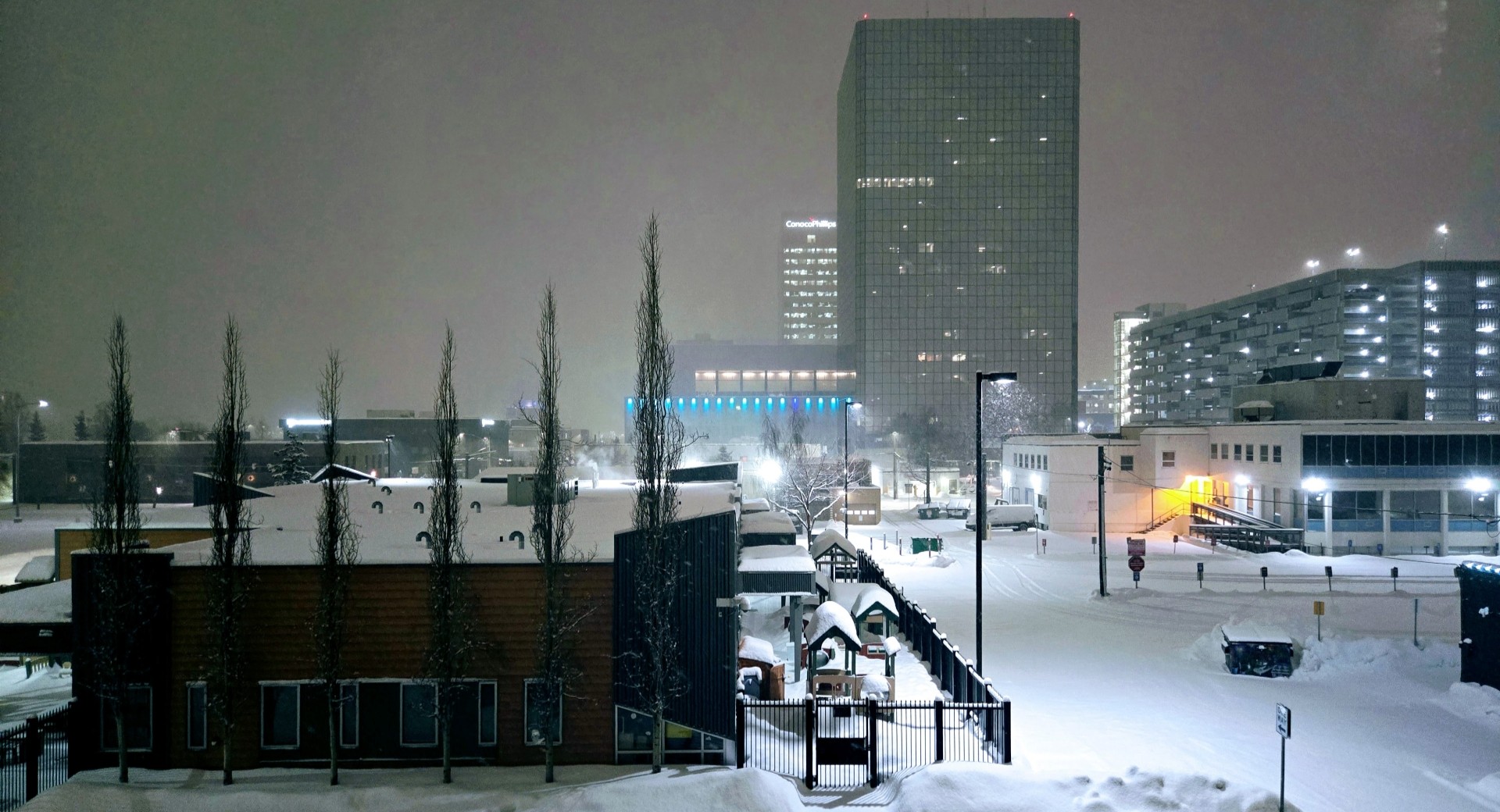
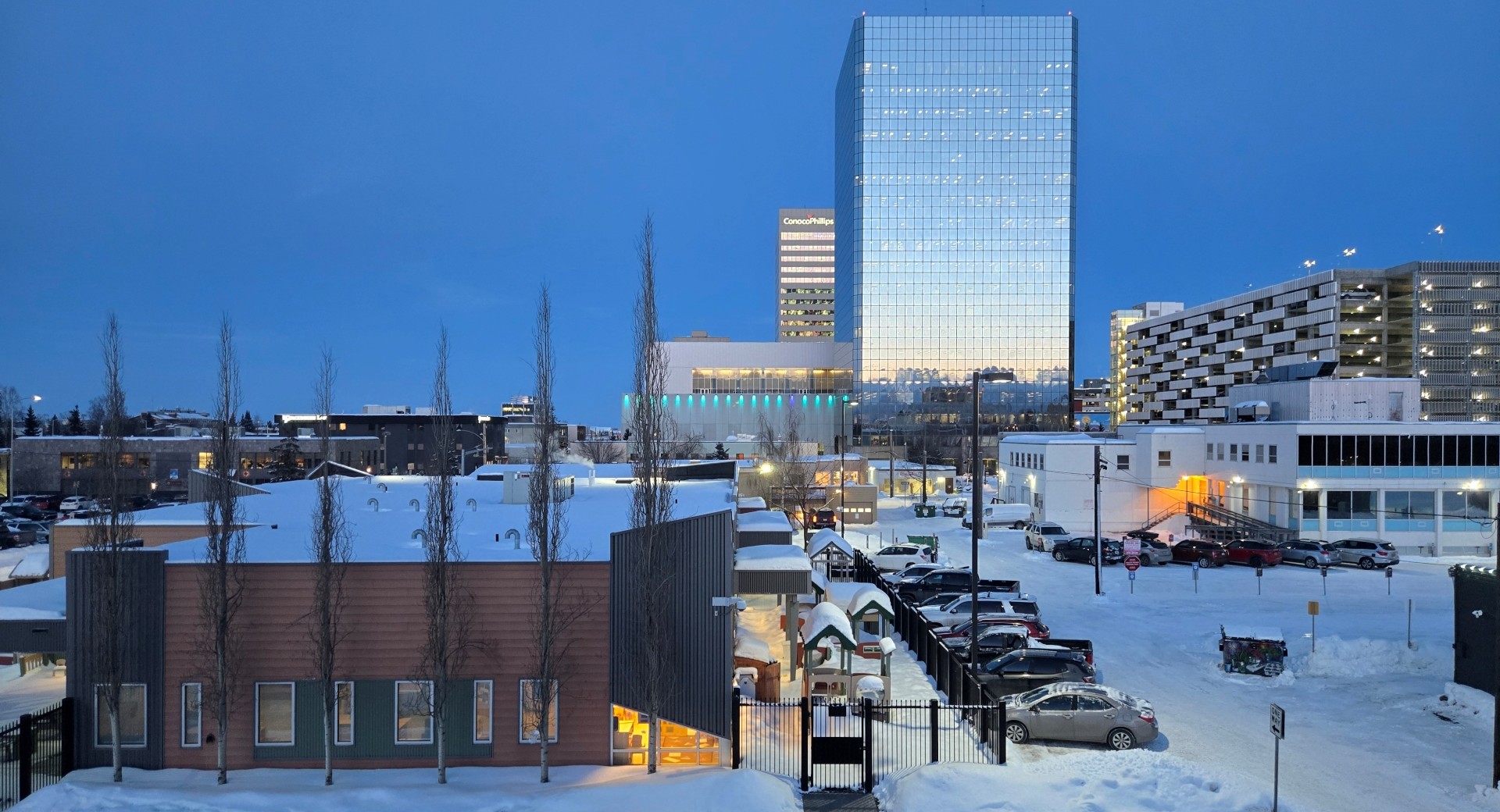
Early in the morning on March 7, 2026, I awoke before my husband in our hotel room. Glancing out the window, I saw the sky was still dark and the moon hung low and bright. Streetlights cast a soft glow over a gentle, silent snowfall. I slipped on my shoes, threw a sweatshirt over my pajamas, and crept down the quiet hallway. Fetching coffee for my hubby was my mission at the moment, but the day’s real mission was something else: We were going to see the Ceremonial Start of the Iditarod!
This trip marks a significant departure from our usual sailing content. Just days after reflecting on our Grenada adventures aboard the Spindrift, we traveled 3,000 miles north from our home in Iowa to visit our son and daughter-in-law in Anchorage, Alaska. A major change in scenery, yes I know! Instead of snorkels and fins, our gear bag was packed with winter boots; our thickest socks, hats and mittens; and our “polar vortex” coats.
Heading to the Greenbelt
As we sipped our coffee and bundled up, the darkness lifted. Outside, a layer of fresh snow blanketed the streets and people started milling about. The official ceremonial start line was only blocks away from our hotel, but when our son and daughter-in-law arrived, we piled into the back seat of their truck and headed in a different direction to witness the day’s activities: the Chester Creek Greenbelt, a local favorite.
We approached the trail on foot, trudging through the new powder to a street corner where an officer stood at a gate, managing the flow of chattering spectators. Suddenly, a cyclist on a fat bike pedaled furiously up the trail—a fun surprise and my first clue that the race teams were closing in.
“Mushers!”
Only minutes later, a voice muffled by the snow and cold shouted, “Mushers!” The chatter died down instantly. The patter of paws and the swoosh of sleds through the snow were surprisingly quiet as Team 8 glided by, exiting to the left over a footbridge. Then came Teams 9 and 10 in quick succession.
The officer gave us a quick window to cross: “If you guys want to make a run for it, go!”
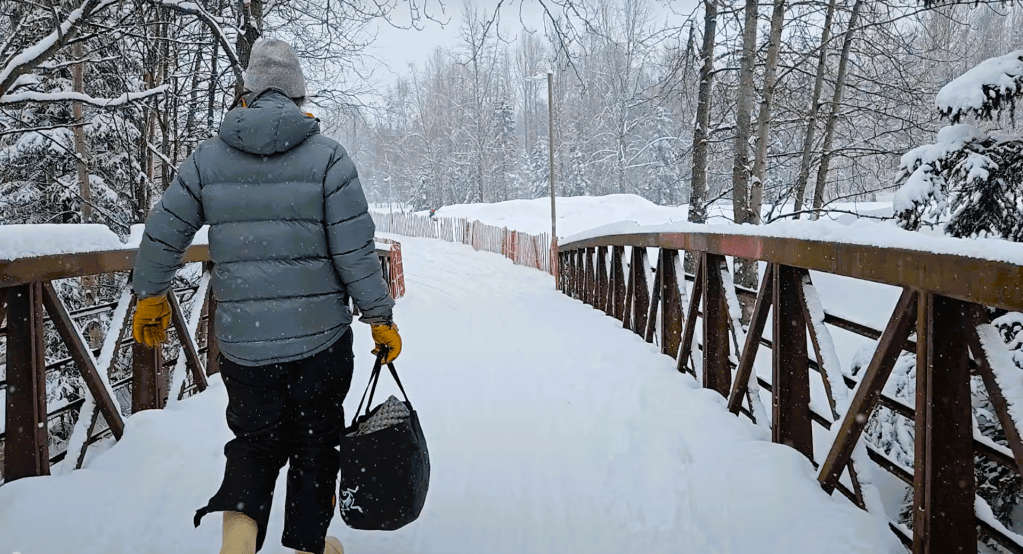
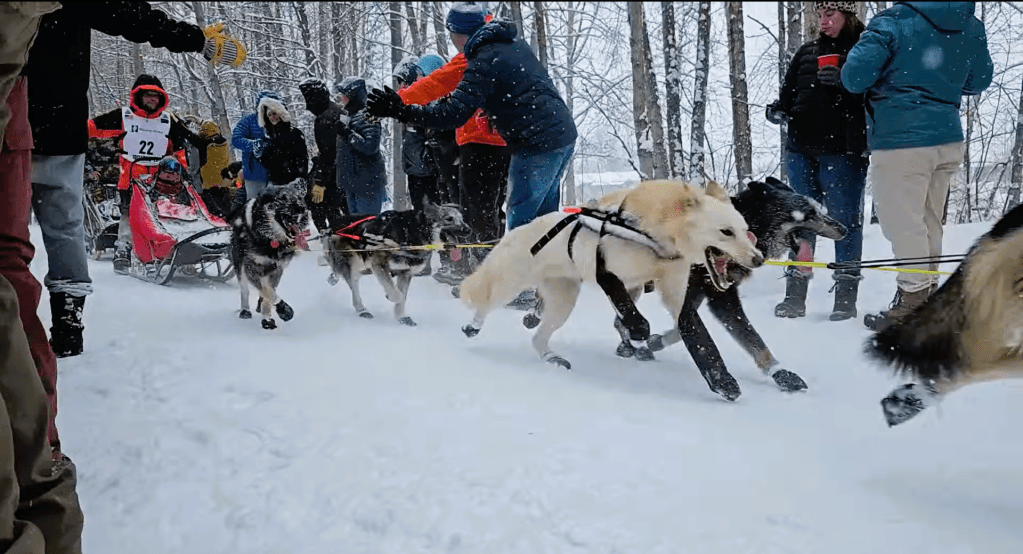
We crossed the bridge and found a clear spot to set up. Within minutes, Team 11 flew by in a blur of fur and energy. We had just enough time to unpack a camp chair and exchange a quick greeting with a local fellow out campaigning for city council—Alaskan politics in the wild!
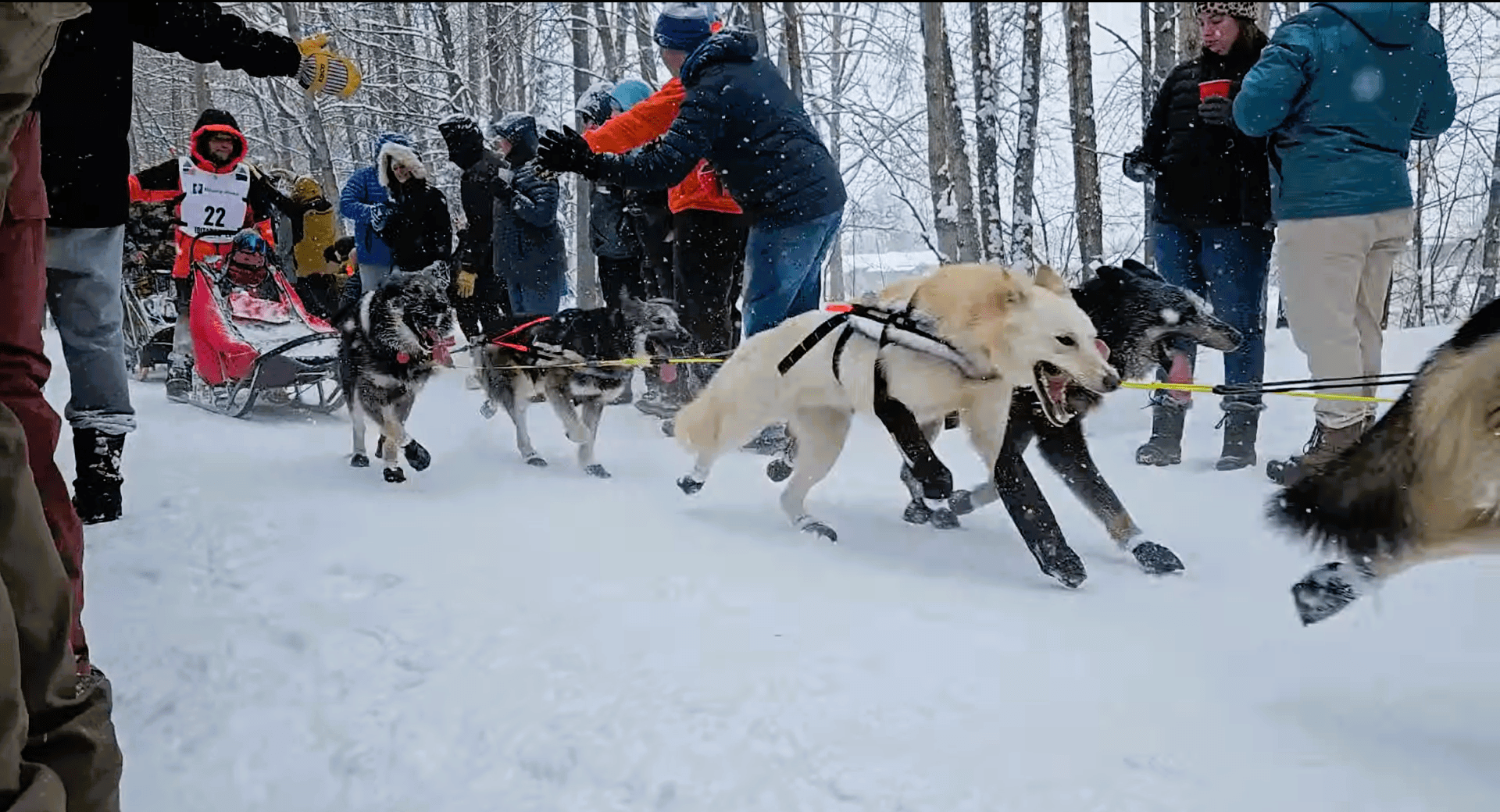
Then, Team 12 approached. But instead of passing by, the musher called out a command, and the team slowed to a halt right in front of us. The sudden silence was filled only by the heavy, steamy panting of these twelve elite athletes.
There we had front-row seats. The dogs, standing in line in their harnesses, dipped their muzzles into the fresh powder to rehydrate. The steam rose from their breath and frost clung to their whiskers like tiny diamonds. The musher gave a quick nod before a sharp whistle sent them lunging forward. Just as quickly as they had arrived, they were gone.
A Community Celebration
The Ceremonial Start is less of a race and more of a massive, 11-mile-long city-wide tailgate party. While the competitive race actually starts a day or two later (usually in Willow), the Saturday start in Anchorage is all about fanfare and tradition. The festivities were in full swing along the trail: people in silly hats and furry costumes danced to music, and there was even an “ice bar” carved from packed snow. The beer never tasted so good, even in 19-degree weather!
Much to my surprise, we didn’t get cold. In Anchorage, a snowy day with no wind is the coziest weather you can ask for. What made it extra special was that at every stop, our kids found friends to introduce us to. It seems that in Alaska, the wilderness is vast, but the community is tight-knit. To experience something so festive and unique with our children was a gift. This will definitely go down as one of the coolest things we’ve ever done.
The Ceremonial Start: An Overnight Transformation
Downtown Anchorage undergoes an overnight makeover. Since the race takes place on city streets, the city hauls in hundreds of truckloads of snow (often stockpiled from earlier in the winter) the night before. By Saturday morning, 4th Avenue is paved with several inches of packed snow specifically for the dog teams.

The Musher Staging Area
Before the race begins at 10:00 AM, 4th Avenue and the surrounding side streets become a bustling "pit" area. Unlike the official restart, the atmosphere is relaxed. Mushers often chat with fans, sign autographs, and hand out booties (the little shoes the dogs wear). You’ll definitely hear the start line before you see it. The dogs are incredibly high-energy; they bark, howl, and lunge in their harnesses because they know they are about to run.

The IditaRider Tradition
Each sled at the ceremonial start carries a passenger known as an IditaRider. These are people who won an auction (sometimes paying thousands of dollars) to ride in the basket for the 11-mile trek through the city. It’s one of the primary fundraisers for the race.

Special Equipment & Rules
Because this is a parade-style event through a crowded city, the setup is different from the actual race. The mushers typically run a smaller team—usually 12 dogs—compared to the 14 or 16 they may take on the actual trail. Many teams use a second sled attached to the back (driven by an experienced handler) to help provide extra braking. This is to ensure the dogs, who are spring-loaded with excitement, don’t go too fast through the spectator-heavy city corners. It’s common to see mushers dressed in decorative gear or even costumes, as the pressure of the competitive race hasn't kicked in yet.
Have you ever stumbled upon a ‘bucket-list’ item you never knew you had? Would love to hear about it in the comments!
Discover more from SAIL & SAVOR BLOG
Subscribe to get the latest posts sent to your email.

