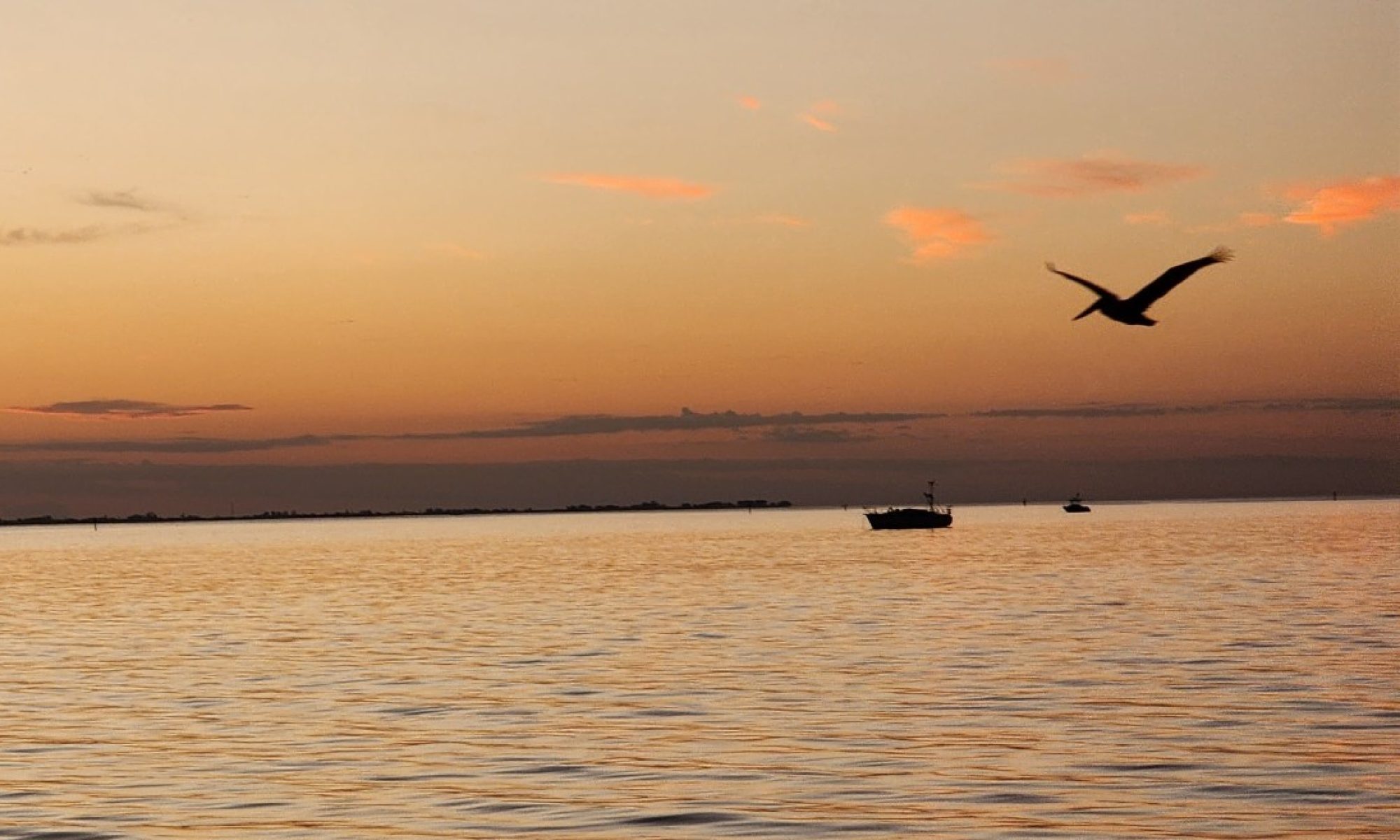
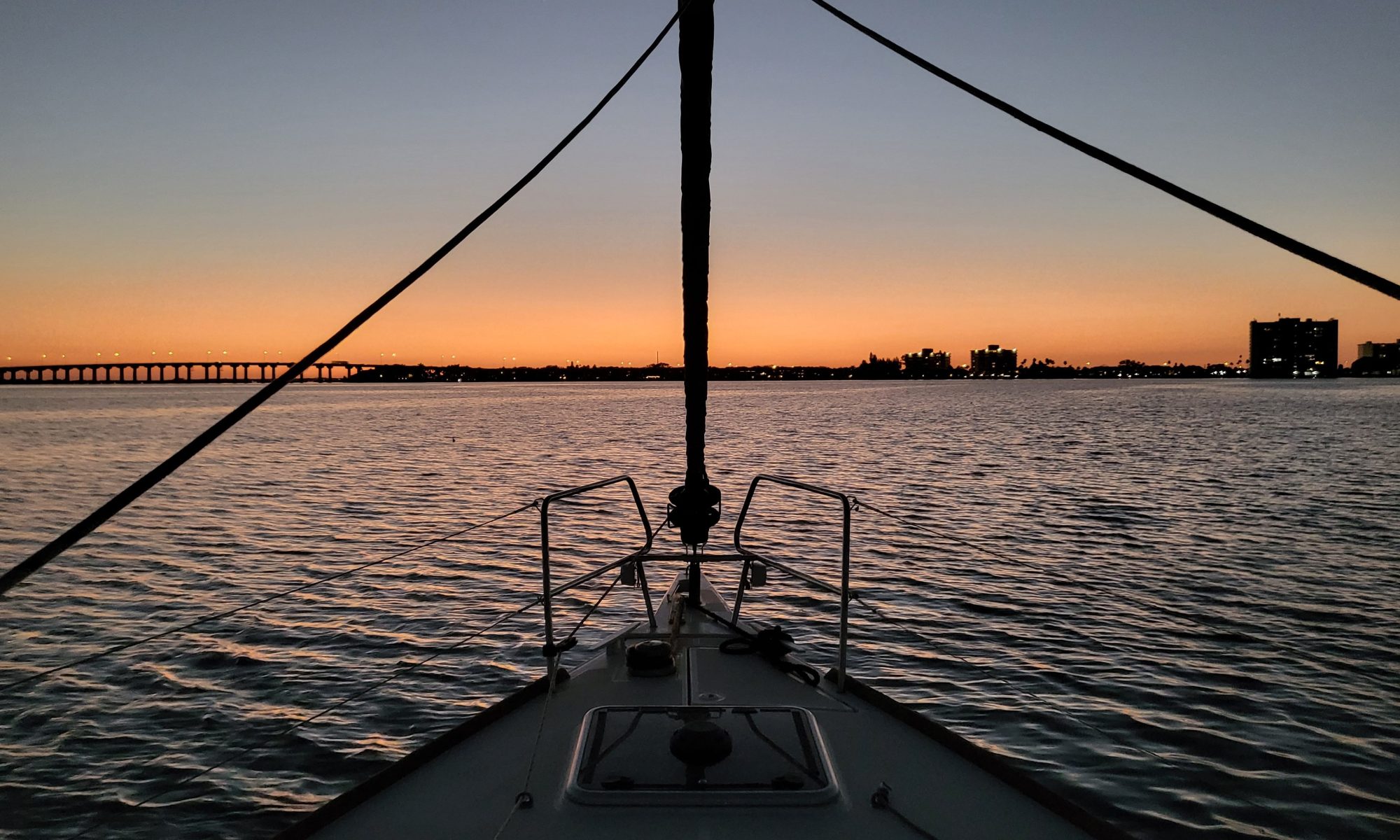
We are approaching the one year anniversary of our Offshore Sailing School adventure where we spent 8 days learning to sail. It remains one of the most exciting things Kent and I have ever done! Thought I’d put together a little write-up of the series of events. Here is how it went:
One good thing came out of the pandemic:
My husband and I decided on a retirement plan! However, it’s not an ordinary plan – we want to live on a sailboat. So, we are giving ourselves 10 years to learn how to sail. Between now and then, we are going to learn and experience as much as possible so that when the time comes, we’ll be able to walk on and sail away.
We imagined that it would take about 10 years to learn, especially since we live in Iowa. So, we got busy, watching videos, joined a sailing club, got books and magazines, etc. When Kent stumbled upon an ad from The Moorings, a boat charter company, it sparked his imagination. If we could learn to sail, we could charter a boat! We could take sailing vacations, get away from Iowa winters, bring along family and friends! And we could do it before retirement!
To charter a boat, though, you have to know how to sail, and when Kent inquired, The Moorings referred him to Offshore Sailing School. And that, my friends, is how we got here. In this three-part series, I’m going to tell you all about our sailing school adventure!
Saturday, Sunday: February 4-5
Class Time and Day Sailing
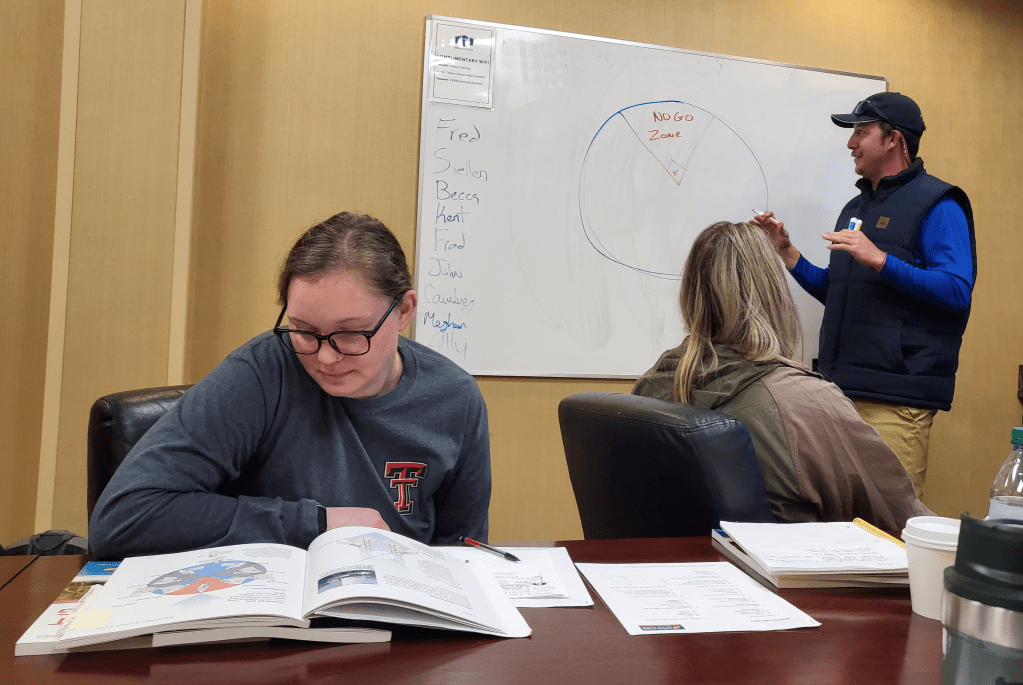
Sailing school began in the classroom at the Hampton Inn, St. Petersburg, FL. We needed to speak the same language before we could talk about sailing, so Saturday morning started with terminology – new terms, such as: rigging, fender, bilge, points of sail, winch, tacking and jibing, heeling, lift, luffing, wing on wing, trim, reefing, weather and lee helm, etc.
After lunch, we headed out for our first sail on a Colgate 26. The Colgate is a 26 ft open keelboat that was designed specifically for training. Along with an instructor and four crew mates, we set out into the Tampa Bay! Even though much of the stuff was review for us, as we had been learning to sail for two years at our sailing club in Iowa, we were wildly excited. All of our previous experience had been limited to a small central-Iowan lake; Tampa Bay seemed legit.
The weather was cool, the sea was calm, and we had a bit of a breeze! Conditions could not have been better. We tacked, we jibed, took turns at the helm, and got used to the feeling of being heeled over!
Sunday started back in the classroom and by the afternoon, we were back on the water. The wind had died down by then so we didn’t get much sail time, however, it was a good opportunity to learn the crew overboard drill and the quick stop method (using the motor at times).
Monday: February 6
Moving On Board
After a good night’s sleep, we got up and headed over to the dock where we met our crew mates: Joe, a former Navy engineer, Christian, a Bostonian transplanted from England, and our Captain, Kelly, from St. Petersburg. We each came with our own levels of experience and aspirations, but it proved to be a great mix!
Preparing to Embark
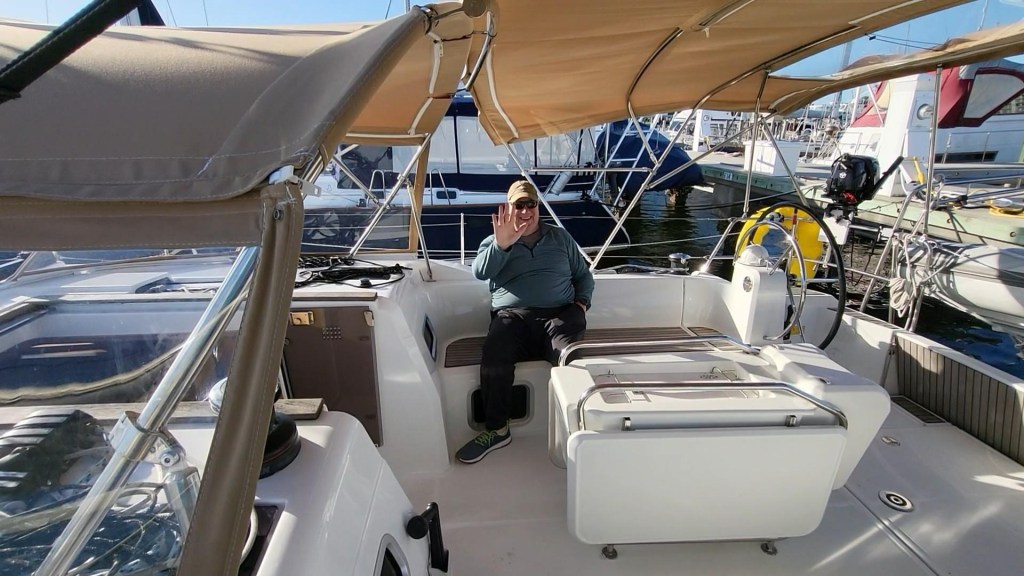
Breaking Away, the 48 foot Jeanneau we were going to live aboard for the next 6 days, was dazzling in slip 13. She was by far the biggest sailboat we’d ever set foot on, and to imagine that we were going to actually sail her ourselves was exciting and frightening! Each party had their own cabin and head (bathroom), Kent and I shared. We boarded the vessel, stowed our gear, and got ourselves situated.
OSS arranged for the week’s provisions (the sailing term for food). Their preparation included breakfast, lunch, and snacks, as well as 4 dinners to be cooked on board. We were extremely pleased to see that Kent’s request for gluten-free food had been honored! There were plenty of options for him and he was not going to go hungry after all!
Before we could do anything, it was time to learn about the systems. (“Systems” is the blanket term for all the parts of a boat beyond the basic floating and sailing parts. This is one topic Kent is particularly interested in, and for that I’m thankful because honestly, some of it is over my head!)
- Mechanical systems – We started with the water holds – pumping out the black water and pumping in the fresh water – which didn’t take long, 10 minutes max. In addition, we learned to check the engine oil, the engine belts, and the bilge pump!
- Electrical systems – A thorough discussion of generators, batteries, offshore power, and the VHF radio was right up Kent’s alley.
- Safety systems – Kelly covered important safety topics ranging from lifejackets, emergency radio calls, fire extinguishers, life rings, and life rafts.
Getting Underway
At this point, the only thing left to do was get out there! Our captain was thoughtful about how to get out of the slip. It was a tricky proposition though, because the wind was pushing us into the dock! But Kelly had a vision and a plan to move the boat out of the slip unscathed. He put each of us into position, discussed our duties and how to handle the lines (ropes), and before we knew it, with our Captain at the helm, we were underway!
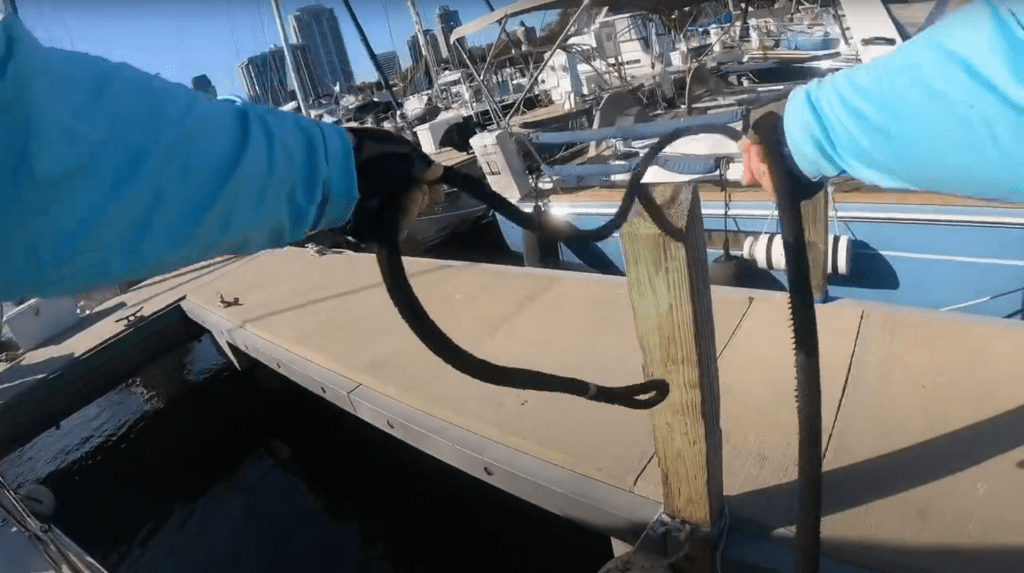
As we navigated out of the marina and into the bay, all of us were eager to hoist the sails and take off. Instead, Kelly had us motoring, each of us taking turns at the helm. It was a good exercise because we were able to get a feel for the boat under power.
Out in the bay, we made our way into a channel and cruised out toward the Sunshine Skyway bridge. Meanwhile, Kelly took the opportunity to discuss traffic through the channel, navigation, water depth, and other pertinent topics.
Setting the Hook
We approached our first night’s anchorage in the afternoon at Pinellas Point. Kelly had us in about 10 feet of water, and again, he had thoughtfully “choreographed” the process. There were two on the foredeck: Joe used a winch at the bow (a windlass) to slowly lower the anchor until it lay on the seafloor. And Christian used hand signals to communicate to the skipper (myself) to slowly move the boat backwards to pay out the chain. At intervals, we moved the boat backward faster or slower, letting the tension on the chain pull the anchor to dig deeper into the seafloor. When the proper length (scope) was reached, our hook was set!
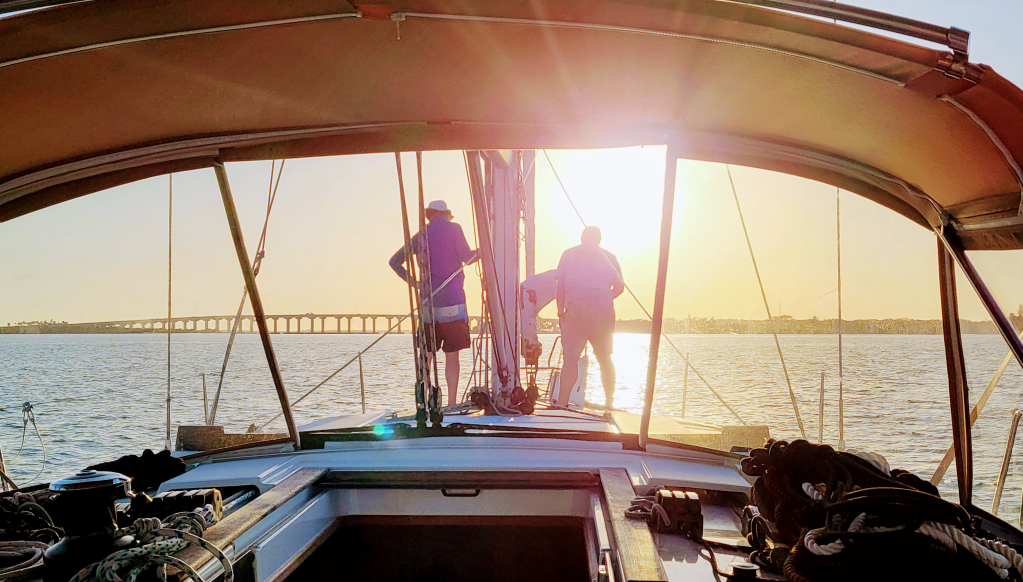
Our First Sundowner
For dinner that evening, Kent grilled halibut, Kelly prepared rice and fresh veggies, and we feasted like a bunch of sailors! As we settled in for the night, we took a moment to celebrate with a sundowner and rehash the lessons of the day, as seen in our Day 3 recap.
This concludes Sailing School Part I. Stay tuned for more to come!
If you’d like to see actual edited videos of our experience, please enjoy Sailing School Part 1
Thanks for sticking with me here! Leave your questions/comments in the comments!
Discover more from SAIL & SAVOR BLOG
Subscribe to get the latest posts sent to your email.


3 Replies to “Sailing School Part I”