Captains Log
Vessel: Spindrift (Moorings 5000)
Location: Port Louis Marina, Grenada to the Grenadines
Vessel State: At anchor and underway
Systems Check:
- Navigation ✅
- Engine vitals ✅
- Bilge/water levels ✅
- Power (Fuel/Generator/Inverter) ✅
- Water maker ✅
- Interpersonal social equilibrium ❓
Observation
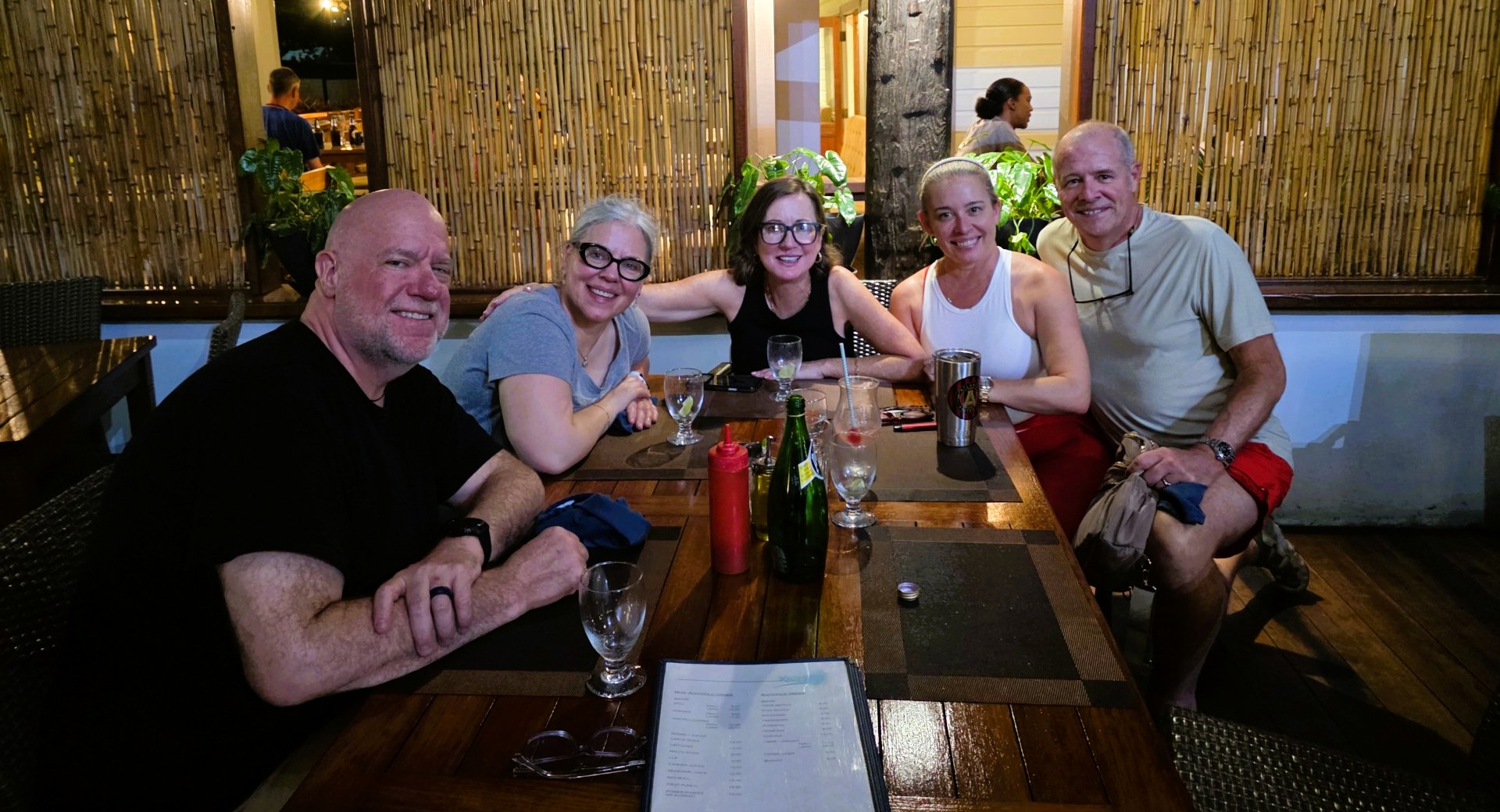
The transition from a two-person monohull plan to a five-person catamaran expedition was a milestone scramble born of necessity. When our original vessel became unavailable three weeks before departure, we faced the daunting challenge of rounding up a crew from landlocked Iowa. Admittedly, we got lucky. Meeting Ron and Katie face-to-face for the first time at the Atlanta airport for a high-stakes “vibe check” only hours before we boarded the vessel was a leap of faith.
But once onboard the Spindrift, a massive 50-foot catamaran that felt like driving a luxury SUV, rituals emerged to soften the inevitable friction of life in tight quarters. These weren’t enforced chores or rigid schedules. Instead, our crew naturally synchronized into a rhythm of coordination, achieving what Kent described as perfect geometric stability.
The Shape of a Crew
A nicely structured crew can provide a vital interpersonal buffer.
Navigators (Kent and Becca): Managed the big-picture planning and the technical demands of the helm.
Galley Lead (Katie): Acted as the Chef and Chief Morale Stabilizer, knowing precisely when a stressful mooring maneuver might need to be neutralized with a round of rum punches and cheesy nachos.
Shared Space Manager (Maria): A one-woman cleanup crew whose eye for order provided the shared space sanity required to keep the salon from feeling cluttered or claustrophobic.
The Mentor (Ron): A seasoned voice who provided a steady presence, the voice of wisdom, and initiated critical operational readiness drills, such as the impromptu crew-overboard exercise for a lost hat.
The Spindrift: To be fair, the vessel itself acted as a silent partner in this sanity-maintenance system. The spacious, luxurious layout of the Moorings 5000 allowed Maria to convalesce from a pre-departure illness in a private, en-suite cabin without being isolated from the team.
The Artifact
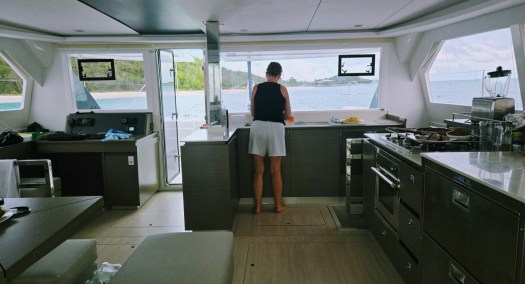
The stew crew maintains equilibrium in the galley.
Subtext: The surface image of meal preparation masks the raw reality of five distinct personalities successfully navigating the friction of the littoral zone. It is the visual representation of a “well-fed ship” maintaining its social redundancy.
The Crew Agreement Checklist
To optimize your own charter so it doesn’t succumb to the weight of the moment, consider these factors before departure:
- Biological Clocks (I’d argue, this is possibly the most important factor): Identify the early riser(s) to manage the morning coffee ritual. This was me! 😉
- The Galley Split: Divide the labor in the galley. Who finds peace in cleaning versus those led to the galley?
- Seasickness Readiness: Designate someone to maintain a “comfort kit.” Have scopolamine patches, ginger tea, hydration packets, etc. at the ready.
- Technical Comfort: Establish everyone’s technical goals and comfort levels at the helm.
- The Skinny Person Requirement: Make sure someone on board can fit through a hatch if the door hardware fails 😉 (We learned the hard way in the BVI – Thank you Mary!)
Navigator’s Inquiry: If a vessel is only as strong as its weakest point of contact, is the captain’s primary duty the trim of the sails or the equilibrium of the souls on board?
Discover more from SAIL & SAVOR BLOG
Subscribe to get the latest posts sent to your email.
 SAIL & SAVOR BLOG