This trip was born from a sudden change in plans three weeks before departure: our original 41-foot monohull was replaced by a massive Moorings 5000 catamaran. A whirlwind scramble to find crew commenced, and within a week, against the odds, we assembled a five-person team ready to embrace the unknown.
What follows is Part 3 of 3 in our Grenada Sailing Adventure series. In this chapter, we tackle the most challenging legs of our 100-mile circuit and embrace the authentic magic of the islands with a tongue dip of “under the counter” spiced rum.
See A Grenada Sailing Adventure – Part 1: Finding Our Sea Legs.
See A Grenada Sailing Adventure – Part 2: Island Rhythms & Safety Drills.
Day 6: Castaways
On Tuesday, January 13, our fifth full day of sailing, the morning began around 7:00 AM with our usual coffee. After breakfast Kent drove the dinghy to the Canouan customs office to check out of St. Vincent & the Grenadines and back into Grenada, but learned that the staff was occupied checking in a cruise ship anchored offshore. Rather than wait, we decided to push on to the Union Island office. We weighed anchor and departed by 9:20 AM, reaching Union Island around noon. The process was surprisingly quick, taking only about 30 minutes, and we were on our way again to Petit Saint Vincent.
No Umbrella, No Nothin’
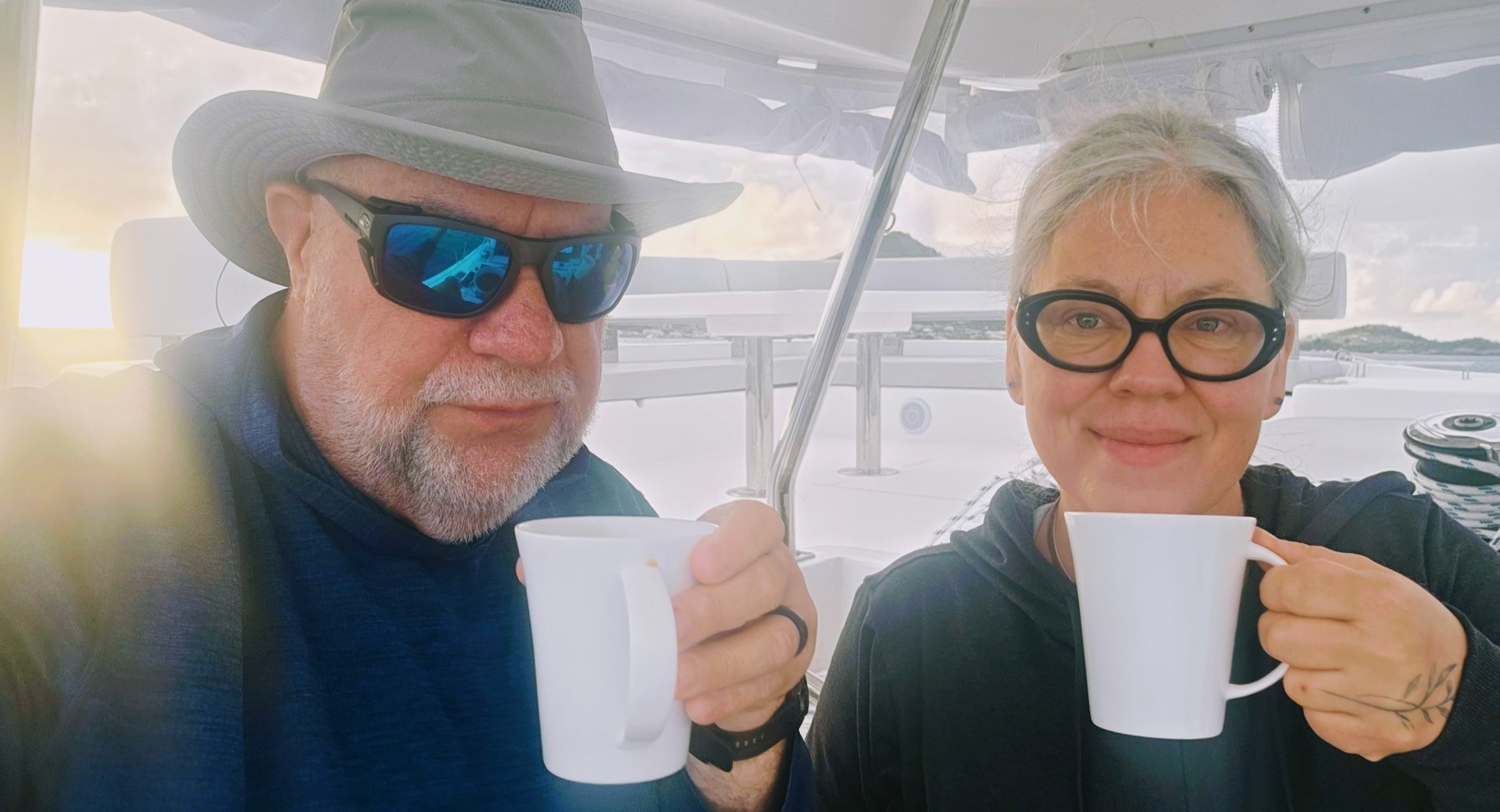
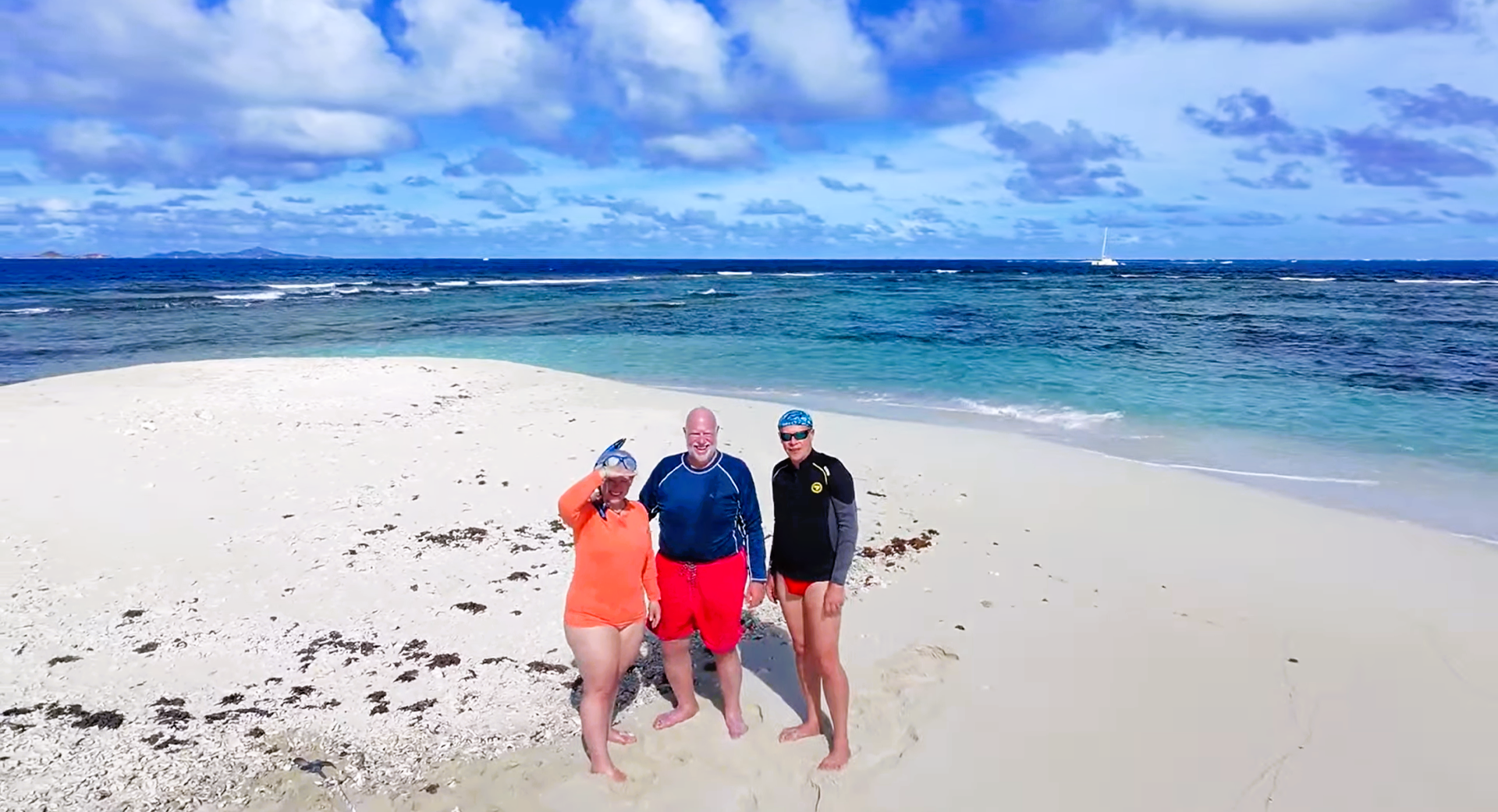
At 2:00 PM, Kent navigated us to a spot in the open ocean where we dropped anchor. Situated between Union Island and Petit St. Vincent was what appeared to be a tiny sandbar rising up in the middle of the ocean. This was Mopion Island, one of the smallest “islands” in the Caribbean. (It’s actually a cay, a small, low-elevation, sandy island on the surface of a coral reef, and its size fluctuates significantly with the tides.)
Mopion is iconic for its single thatch umbrella, originally placed so sailors could spot the low-lying sandbar and avoid the surrounding reef. But the structure is frequently swept away by seasonal storms or high swells. On the day we were there, the umbrella was gone!
Kent, Ron, and I dinghied out to the island to explore, check the anchor, and dive on the lobster trap that was nearby. We were careful to bring the dinghy well up onto the beach and anchor it into the sand. Standing on that shifting sandbar without a single piece of man-made shelter felt truly wild, just three people on a patch of sand in the middle of the sea, surrounded by nothing but blue water and the sound of waves.
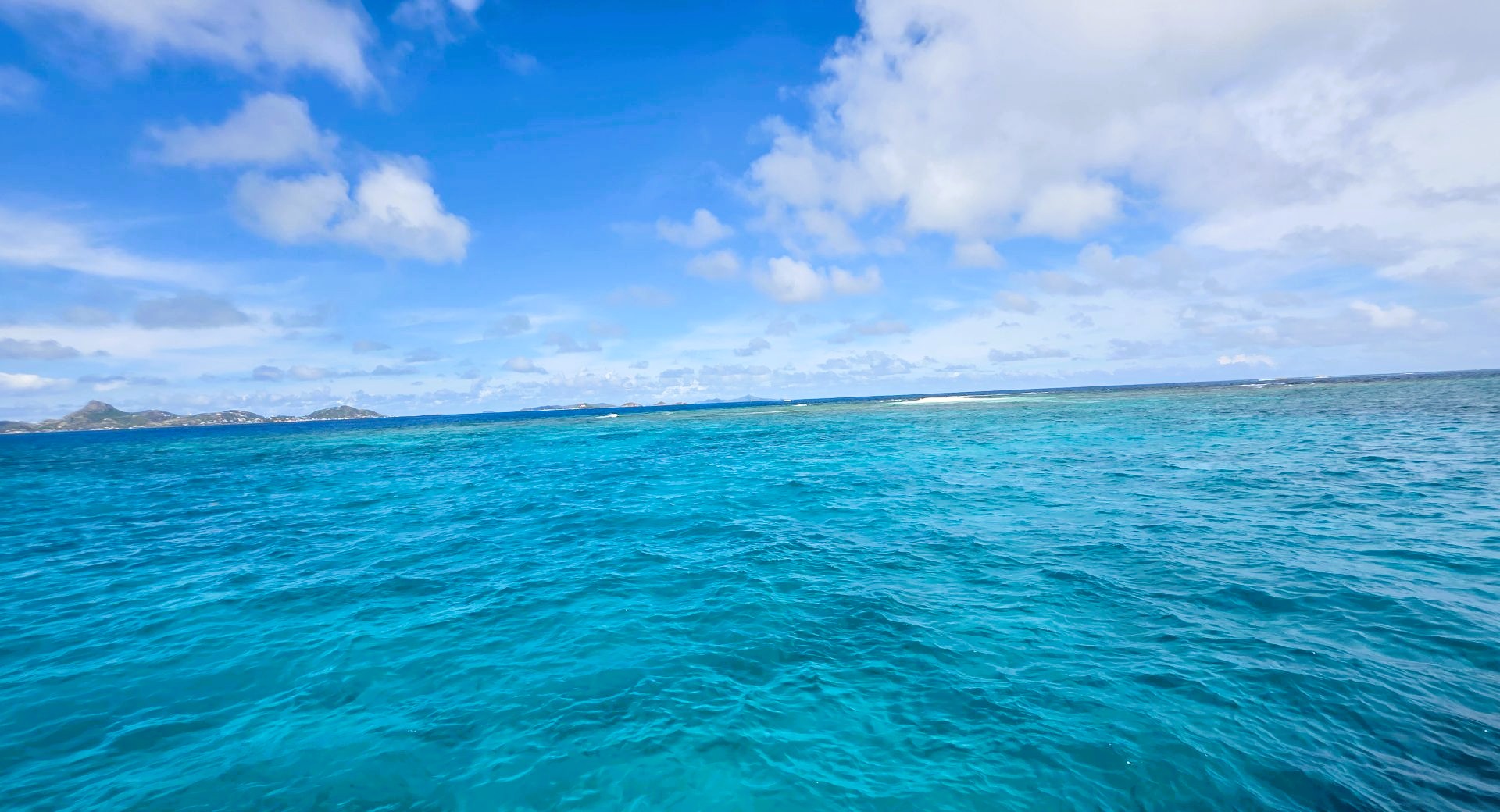
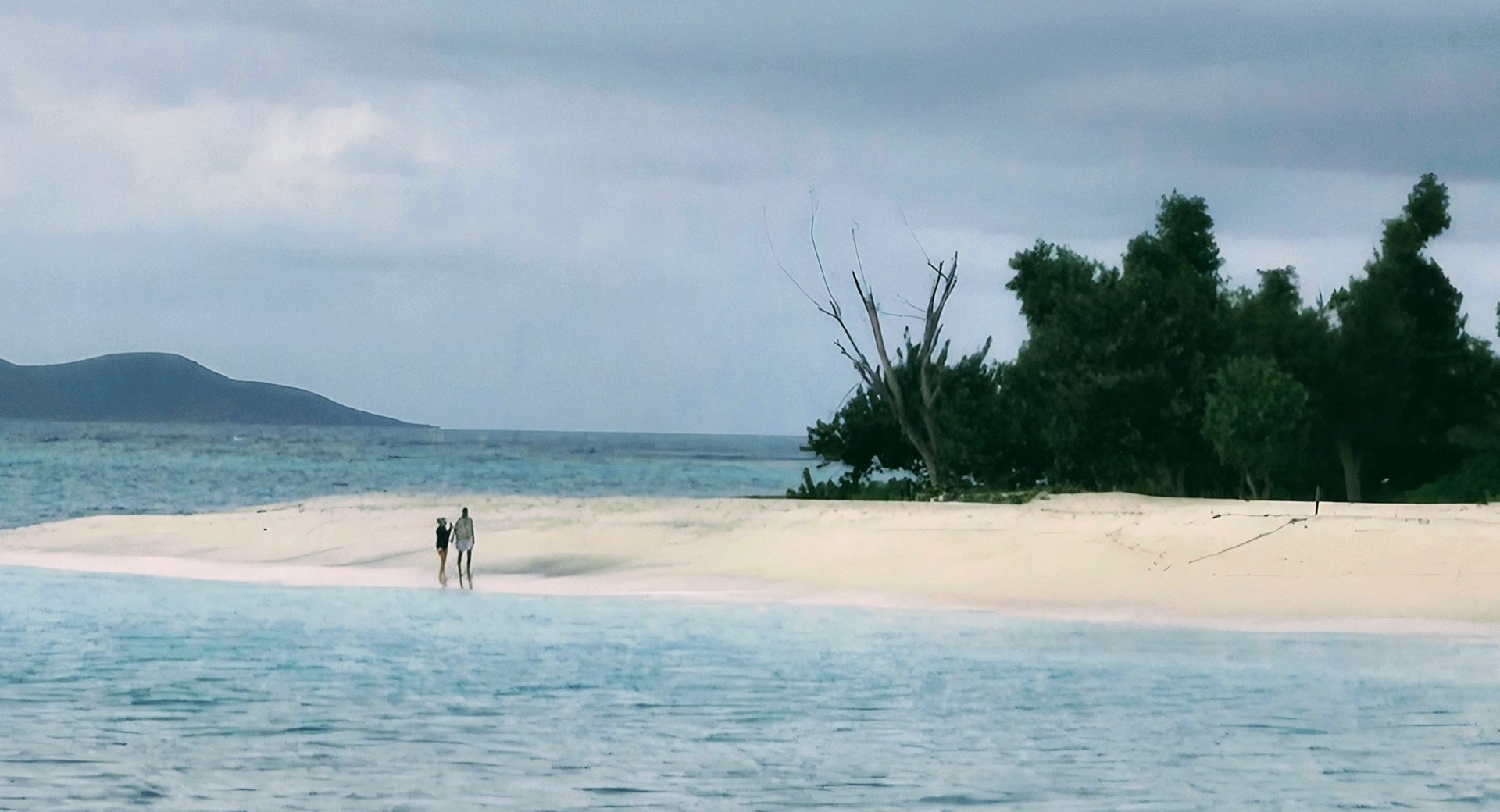
That afternoon, we arrived at the pristine shores of Petit Saint Vincent. One our guides mentioned that the beach at the anchorage was private land belonging to a resort, but the resort had been destroyed by a hurricane. Consequently, we were not certain about whether we were even allowed on the beach. But Katie and Ron decided to risk it and took a sunset walk.
Day 7: The Long Haul
Wednesday, January 14, was the day of our longest haul. We pulled anchor at 7:00 AM for a 40-mile trek back toward the main island of Grenada. This would be the most challenging leg of the trip. The catamaran handled the rolling seas beautifully, but the physical demand of the journey was real.
That morning, Kent chose to take the Spindrift along the east side of the islands, steering us out into the vast, open water where Africa was the next stop. The sea state was undeniably big that day, with 8-foot swells coming out of the southeast. Kent found the pitching motion of the 50-foot catamaran exhilarating, but I found myself succumbing to queasiness. It was the end of the week, I was feeling sun bleached, and I had opted not to apply a second scopolamine patch. I retreated to the salon for a nap, and after about an hour of resting while the boat surged through the waves, I woke up feeling much better.
We arrived at Dragon Bay at 3:00 PM, where the water sat in a leeward calm. That afternoon, we took the opportunity to snorkel in the Moliniere Underwater Sculpture Park. It was a hauntingly beautiful experience, made even more thrilling when I spotted stingrays and a giant barracuda drifting among the submerged figures.

“Under the Counter” Spiced Rum
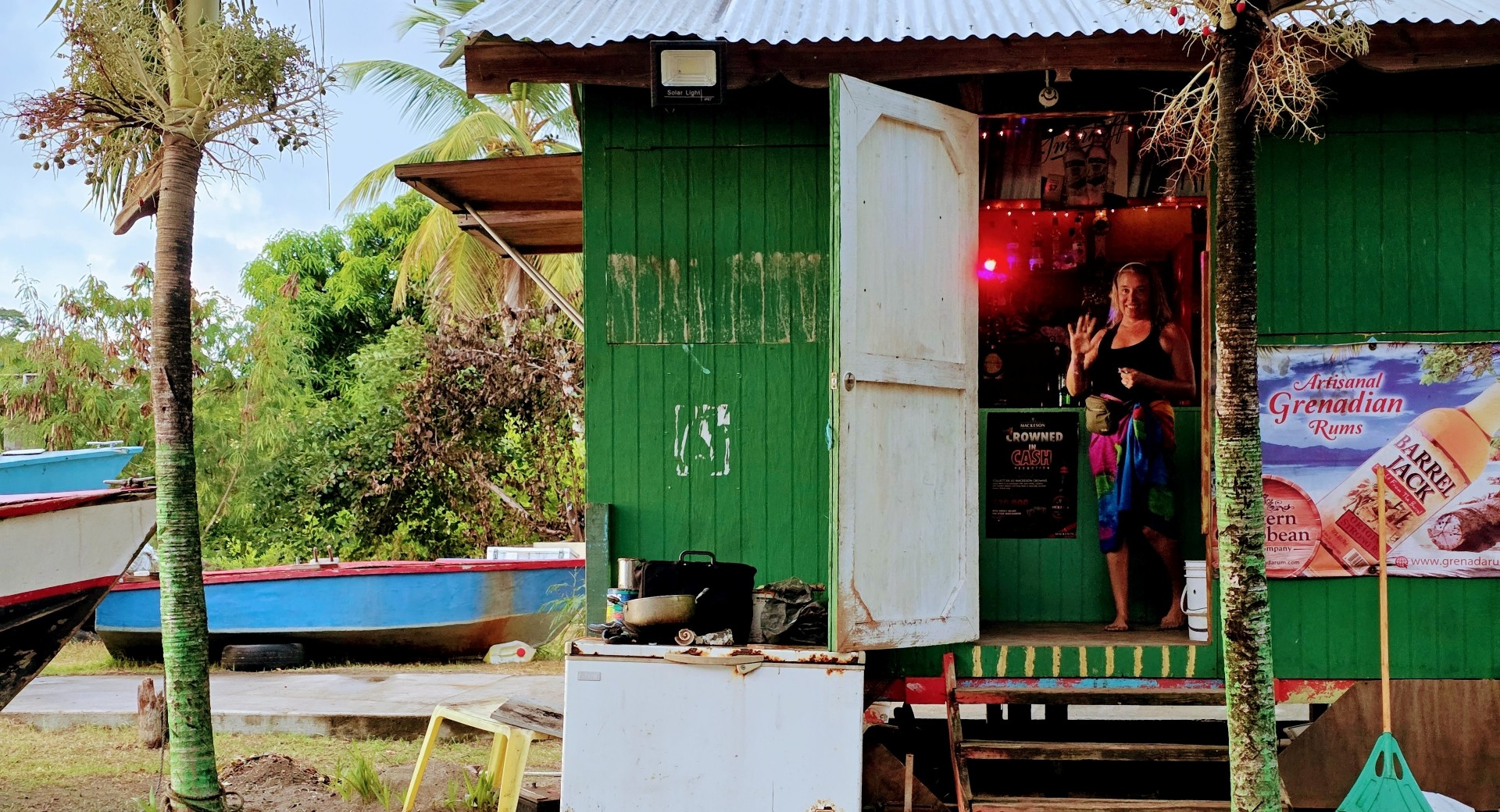
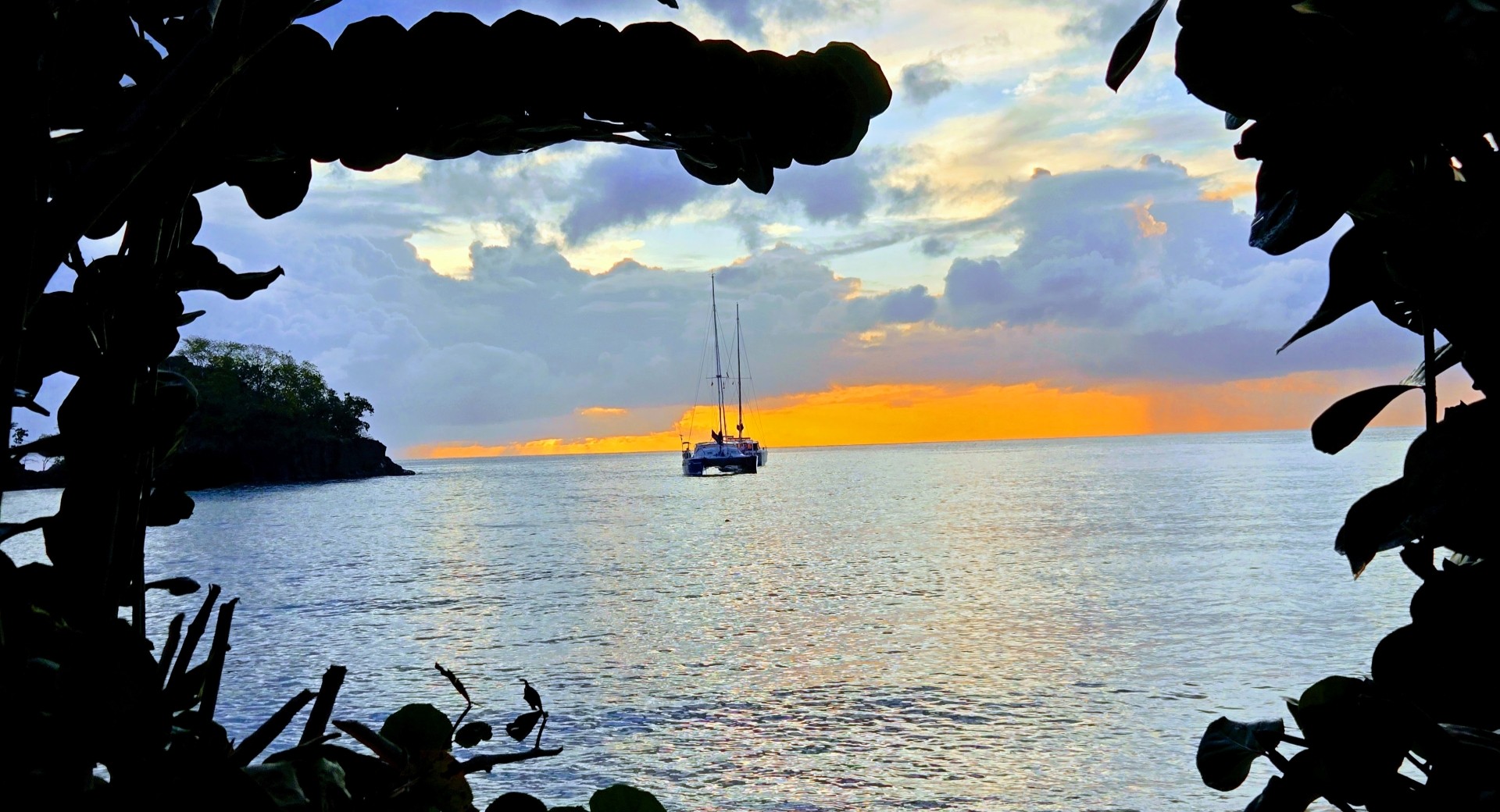
As evening approached, we dinghied to a shady hut on the beach. The scene was pure island style—a shack with a window overlooking the sand where a man stood inside smoking a joint the size of a cigar. He pulled a massive jug from “under the counter,” a local Grenadian tradition. The jug was a wild collection of roots, seeds, twigs, bark, and spices backfilled with potent white rum. One by one, Ron, Katie, Maria, and I cautiously dipped our tongues into a small paper cup to taste the fiery liquid. When it reached Kent’s hands, down the hatch it went. Though I worried he might have been poisoned, Kent said he was perfectly fine and relished the experience.
The Anatomy of a Local Infusion
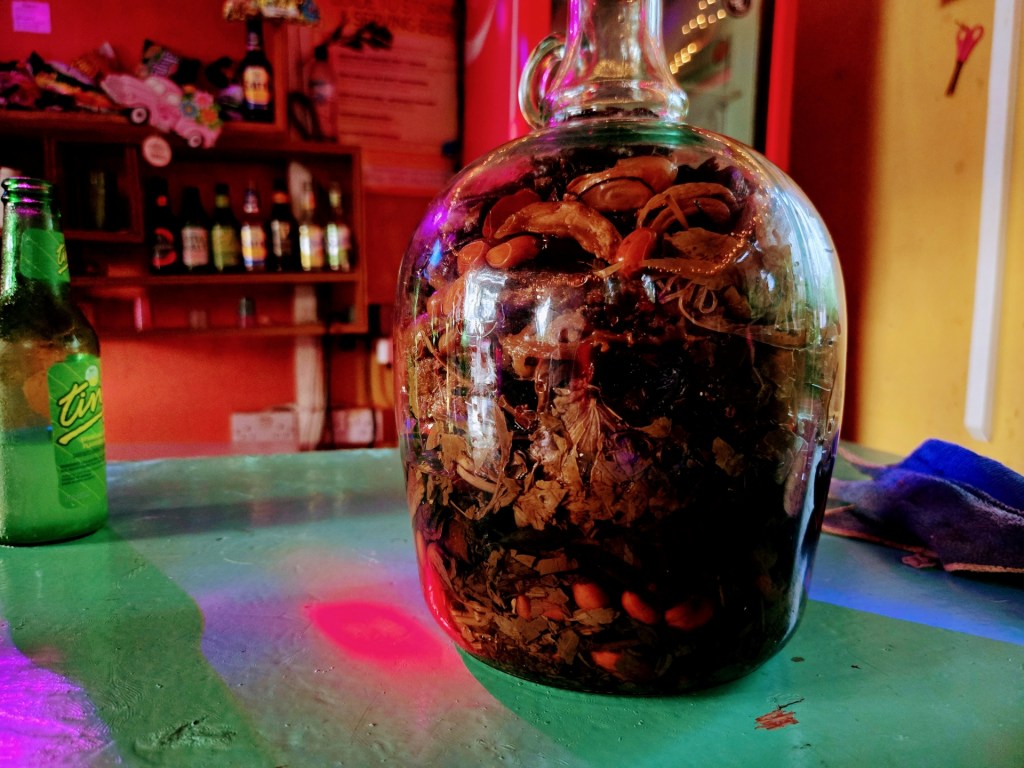
Homemade spiced rum is a cornerstone of Grenadian heritage. Unlike commercial spirits, these infusions are living mixtures, evolving in potency and flavor as they sit.
The traditional way to sample these potent brews is the “tongue dip.” Because the overproof base spirit is so aggressive, a single drop allows the complex, earthy layers of the spices—nutmeg and cinnamon—to bloom before the heat of the alcohol takes over. These infusions are notorious for their delayed kick.
Our final interaction of the day was with a local man, a thin, snaggle-toothed character who was eager to chat up the crew. But the interaction turned a little frantic as we turned toward the dinghy. In his thick island accent, in a stream of jumble of words, I could make out, “money for beer.” Kent rescued the moment by offering him money in exchange for help launching our dinghy. It felt like a fair island trade.
Day 8: Mission Accomplished
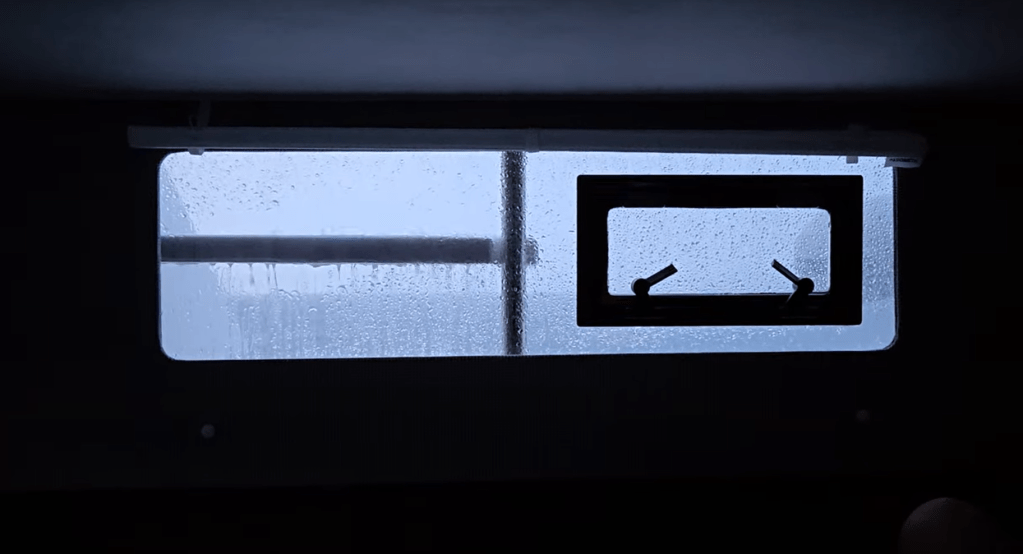
Our final morning on the water, Thursday, January 15, began not with the sun, but with a tropical rain that washed over the islands. We had originally planned one last snorkel through the sculpture garden but the weather had other ideas.
Yet, we didn’t feel shorted. As much as we’d enjoyed the perfect weather throughout the trip, I felt so privileged to see a rainy day in Grenada. The clouds emptied, massive downpours gushing down the lush, green mountains. Then the rain settled and gifted us a full, vibrant rainbow, a “mission accomplished” signal from the island itself. The timing of our journey had been perfect.

We weighed anchor at 7:00 AM, sailing the final five miles south along the scenic west coast. By 10:00 AM, we arrived back at Port Louis Marina. Just as they had during our first exit, a harbor pilot met us to guide the catamaran through the tight moorings and back into the slip. The checkout process was easy, marking the official conclusion of our life aboard the Spindrift.
Discover more from SAIL & SAVOR BLOG
Subscribe to get the latest posts sent to your email.
 SAIL & SAVOR BLOG
2 Replies to “A Grenada Sailing Adventure Part 3: The Long Haul and a Rainy Goodbye”