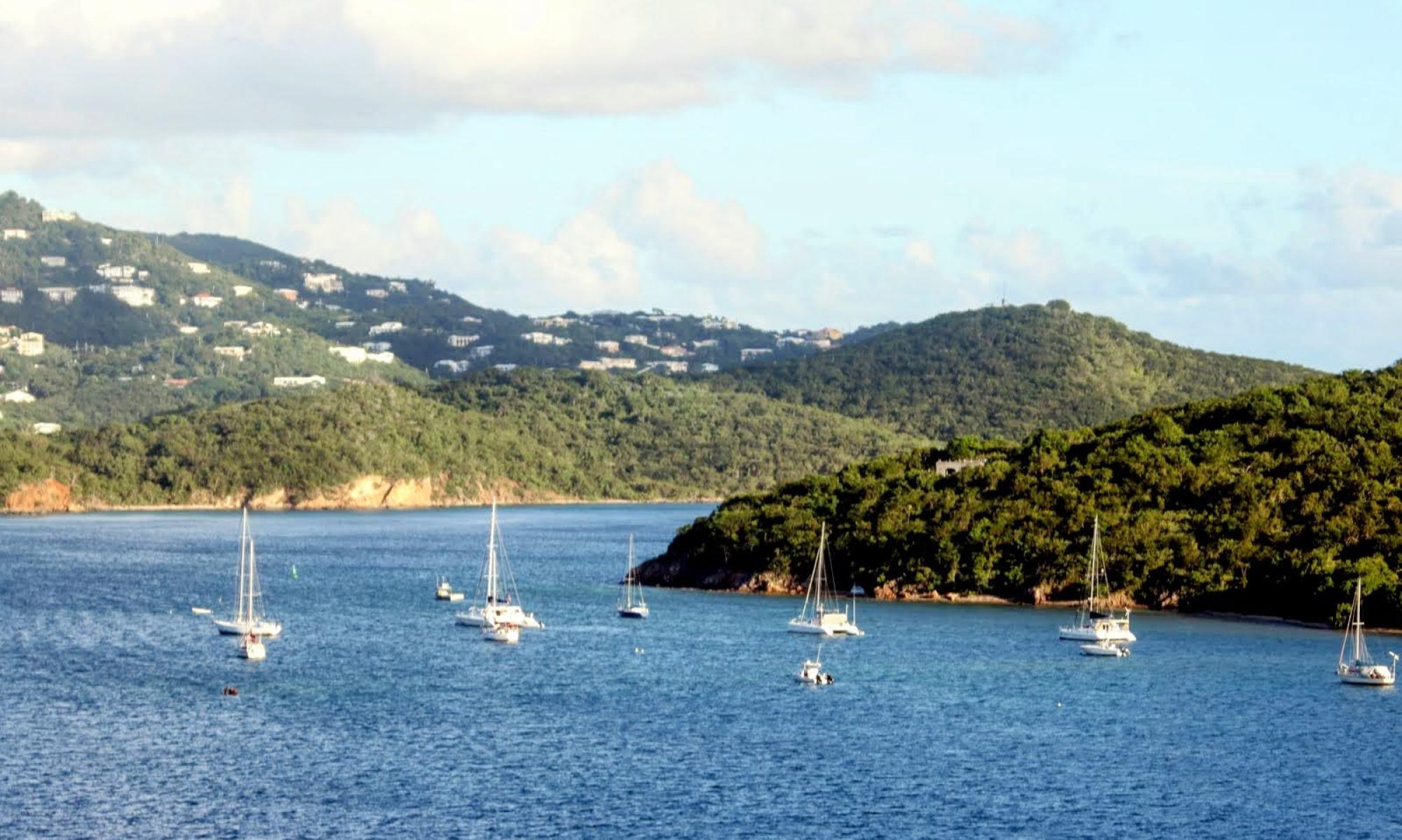
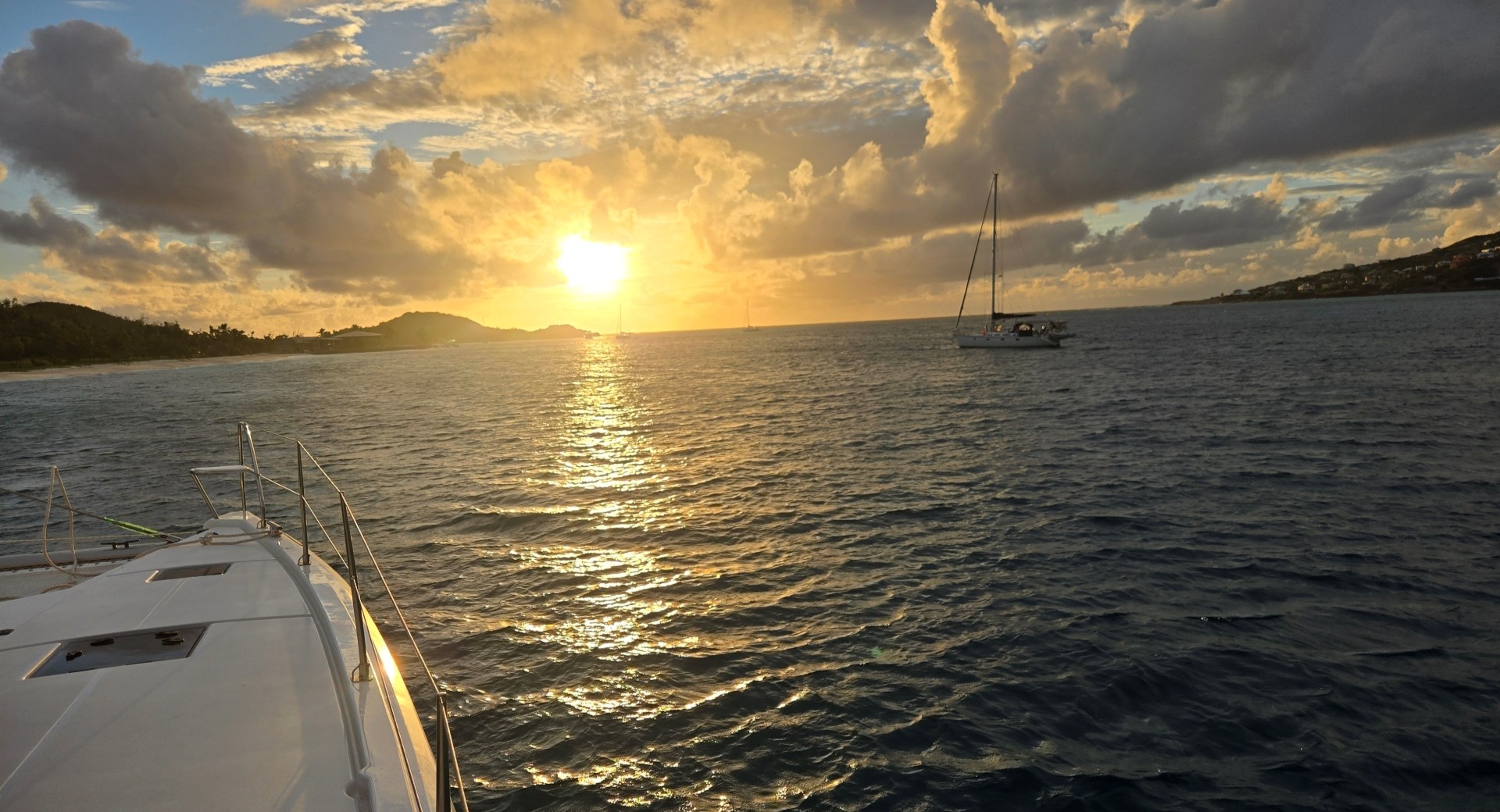
This trip was born from a sudden change in plans three weeks before departure: our original 41-foot monohull was replaced by a massive Moorings 5000 catamaran. A whirlwind scramble to find crew commenced. Within a week, against the odds, we assembled a five-person team ready to embrace the unknown. My sister Maria and her friends, Ron and Katie, joined us on this adventure.
What follows is Part 1 of 3 in our Grenada Sailing Adventure series. Over the next three posts, we’ll take you through the sheer magic of finding our sea legs in some of the most beautiful waters on earth. Our journey begins at 4:00 AM in an airport Uber….
Day 1: A Crew of Five and a Leap of Faith
Our expedition began in the early morning of Thursday, January 8, with a sleepy Uber ride to the airport. But it was in the airport in Atlanta where we met our new crew mates, Ron and Katie, face-to-face for the first time. Our first impression was immediate: they were comfortable, funny, and easy to talk to, which instantly eased my mind about the journey ahead.
I should note here that my sister is an absolute champ! About 5 days before our departure date she messaged me to tell me she’d come down with an illness, and was seriously considering cancelling. When she said she’d never forgive herself for missing out, I assured her that she’d have plenty of time, space, and fresh air to convalesce. She decided to stick with us, and I’m so glad she did. Our five-person crew felt like a perfect team.
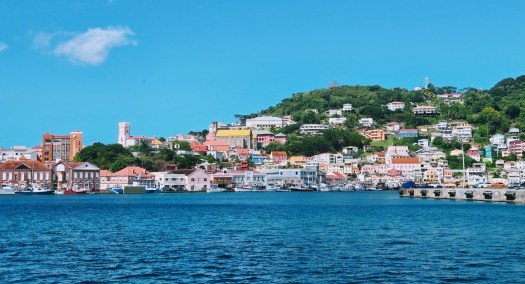
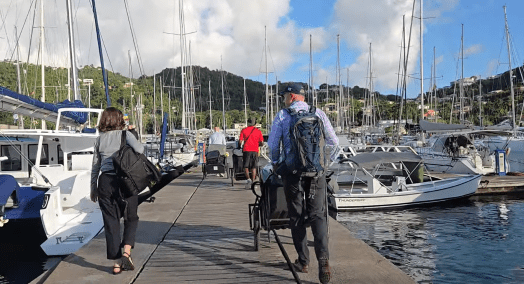
We landed in Grenada around 3:30 PM, cleared customs easily, and took a taxi through the vibrant island scenery to the Port Louis Marina. To prepare for our voyage, we had studied videos of the vessel ahead of time, but as we approached the Spindrift on the dock, the high-gloss wide stance of this 50-foot catamaran was undeniable. Boarding her for the first time was like sliding into the driver’s seat of a luxury SUV you aren’t quite sure you’re qualified to drive. Then the awe turned to chaos as each of us loaded a week’s worth of clothing and gear into her cabins.
We divvied up the four en-suite cabins like this: Kent and I took the owner’s suite in the port hull, Maria took her own private suite also in the port hull, and Ron and Katie settled into the starboard hull. With the luxurious layout and zoned AC, each one of us felt like we had won the lottery and frankly, gotten the better end of the deal.
As we settled in, the stress of the scrambled way this trip came together finally evaporated into giant rum drinks from the marina bar. We filled our insulated water bottles with pina coladas and pain killers and I famously declared that I would need “four points of contact” just to walk the dock safely. It was a joyous night of laughter as we embraced the three-points-of-contact rule we had been practicing for safety.
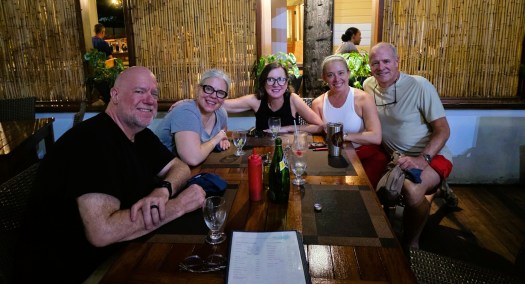
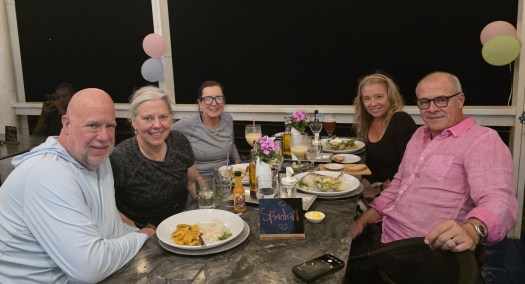
We ended our first day with a celebratory dinner at the Victory Bar and Restaurant at the marina, where I enjoyed fajitas and Kent had blackened grouper. Returning to the Spindrift, we slept soundly in the marina, feeling like we were the captains of our own destiny. 😉
Day 2: We Changed Our Plans Immediately
We awoke at 7:00 AM on day 2 of our expedition, Friday, January 9, still riding the high of boarding our massive catamaran the day before. Kent, Ron and I strolled over to the marina restaurant. Kent and I partook of Americanos (of course), while Ron enjoyed eggs Benedict and mango juice. As Maria and Katie headed off to handle the final provisioning, we prepared for our chart briefing with Nick.
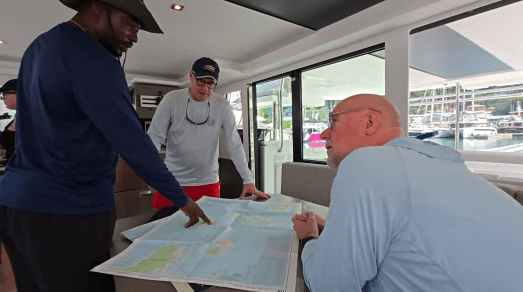
“Yeah, yeah, go to Carriacou. You don’t need to stay here tonight.”
Nick arrived on “island time” around 10:00 AM. Our original, conservative plan was to hop right around the corner to Dragon Bay for our first night, but Nick’s expert gaze shifted our entire horizon. He looked at the charts and insisted we could easily reach Carriacou in a few hours, insisting, “Yeah, yeah, go to Carriacou. You don’t need to stay here tonight.” This pivot felt like a magnificent gift, a bonus night in the Grenadines, and it set a tone of true adventure before we’d untied a single line.
By 1:30 PM, we cleared customs, and a harbor pilot guided the Spindrift through the tight, daunting moorings of the marina. Once we reached open water, the pilot departed, and Kent took the helm. He later described it as feeling like he was sixteen and being handed the car keys for the first time.
The Passage to Carriacou
As we ventured out into the Caribbean, Carriacou bound, we encountered an intense sea state. I was extremely grateful for my scopolamine patch and the way Spindrift handled the water. Kent called her a “1976 Cadillac Fleetwood” ride, comfortable and floaty, despite the sporty conditions.
The Moorings 5000: Technical Breakdown

Model: Leopard 50 (Custom Charter Edition) | Builder: Robertson & Caine (South Africa)

The Power Plant & Performance
Unlike a monohull, the 5000 relies on two separate engines for redundant safety and incredible maneuverability.
- Engines: 2 x 57 HP Yanmar Diesel engines.
- Fuel Capacity: 243 Gallons (approx. 920 Liters).
- Cruising Speed: ~7–8 knots under power; 8–10 knots under sail in 15+ knots of wind.
- Stepped Hull Design: The shelf in the hull above the waterline allows for massive interior cabins.

The Sail Plan
Designed for short-handed sailing, meaning one or two people can manage the entire boat from the helm.
- Total Sail Area: 1,660 ft2 (154.2 m2).
- Mainsail: Fully battened (square top for extra power) with a stack pack for easy storage.
- Headsail: Furling Genoa (for quick deployment and reefing).
- Hybrid Helm: The steering station is raised between the cockpit and the flybridge. This gives you 360° visibility while keeping you close to the social action.

Interior
This boat carries everything needed to stay off the grid in the Grenadines for a week.
- Water Maker: Converts seawater into fresh water.
- Power: Onboard Generator + Solar Panels + 3000W Inverter.
- Layout: 4 en-suite cabins. Each cabin has Zoned AC.
- The Flybridge: This is the 5000's killer feature—an elevated lounge with a sunbed and table that can be safely used even while the boat is under sail.
Rituals and Rewards
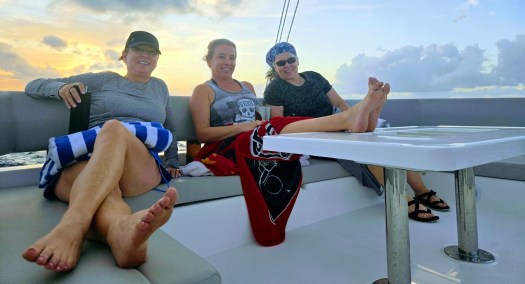
We reached L’Esterre Bay, Carriacou, at 6:30 PM, just as the last wisps of light were setting on the water. The process of picking up the mooring ball in the dark that night was kind of a testament to our developing skills.
There at the bow, Ron and I established what became one of my favorite rituals: we’d talk through the plan, execute the maneuver, then share a high five. Whether we picked up a mooring ball, dropped the mooring ball, dropped the anchor, picked up the anchor, replaced a line, or checked the oil, his steady presence allowed me to focus on these aspects of the 50-foot cat without anxiety.
The master class in crew support happened next. Just as we settled safely onto the mooring ball, Katie instinctively served a round of rum punches and cheesy nachos. After a long, effortful day of navigating heavy seas and racing the sunset, this timely sustenance was a real boost. As they say, “A well-fed ship is a happy ship!”
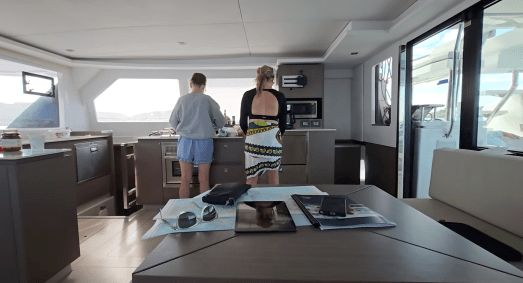
At this point, I was so impressed with our team! Ron and Katie were experienced sailors who understood the rigors of the sea and knew exactly how to support a tired crew. And Maria, our one-woman cleanup crew, tidied the galley and straightened the salon. We were comfortable in the cabin and felt remarkably well-cared for.
We ended the night with a water taxi ride to the Paradise Beach Club, a no-shoes-allowed restaurant where the sand met the floorboards. In Cariacou on a Friday night, it was Mahi-mahi for me and Lambie (conch) coconut curry for Kent!
Coming Up in Part 2: The journey continues as we head deeper into the Grenadines. From an impromptu Crew Overboard drill, to swimming with sea turtles at the Tobago Cays, things got absolutely magical! Plus, we’ll take you inside a beachside lobster feast prepared by “Queen Elizabeth” herself!
Discover more from SAIL & SAVOR BLOG
Subscribe to get the latest posts sent to your email.
 SAIL & SAVOR BLOG
One Reply to “”