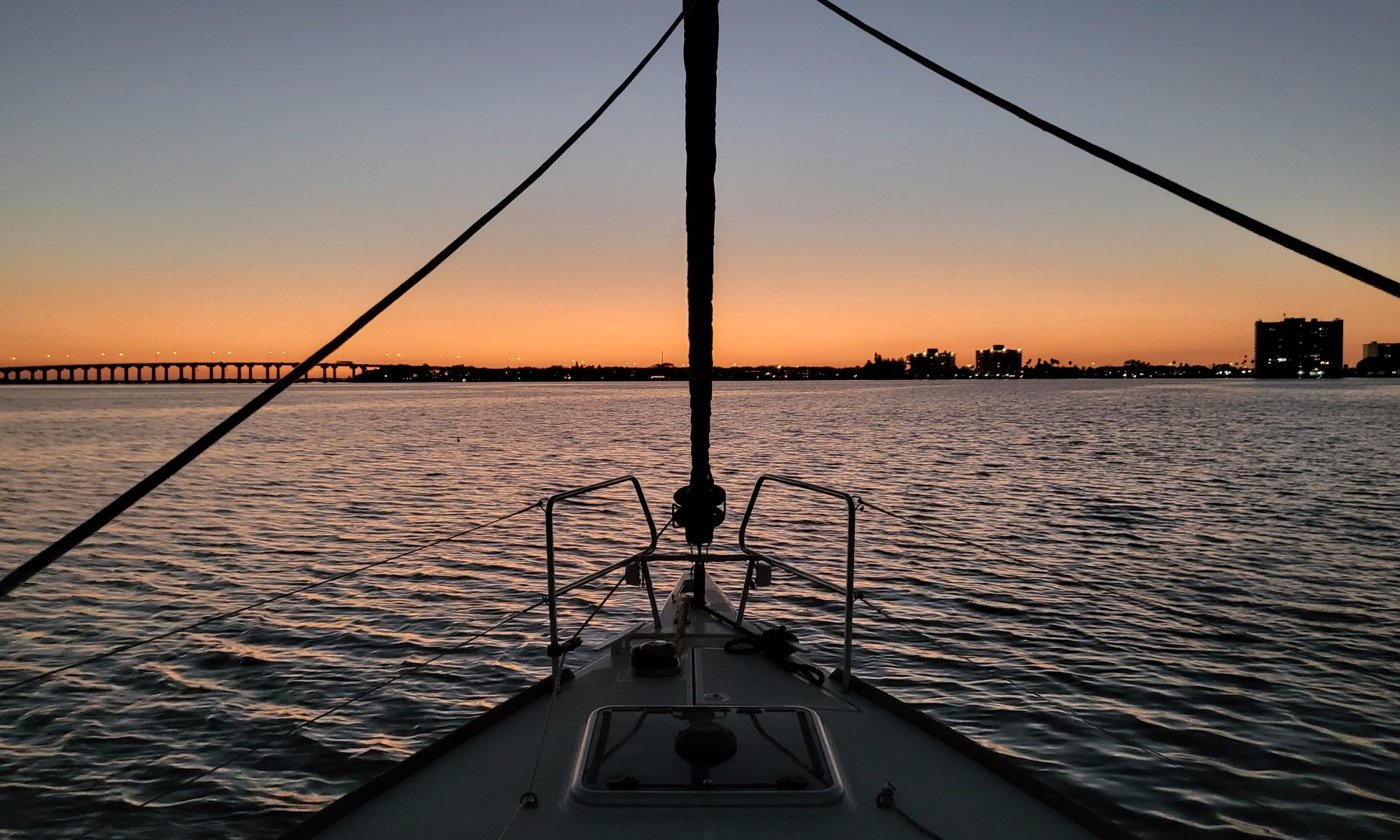
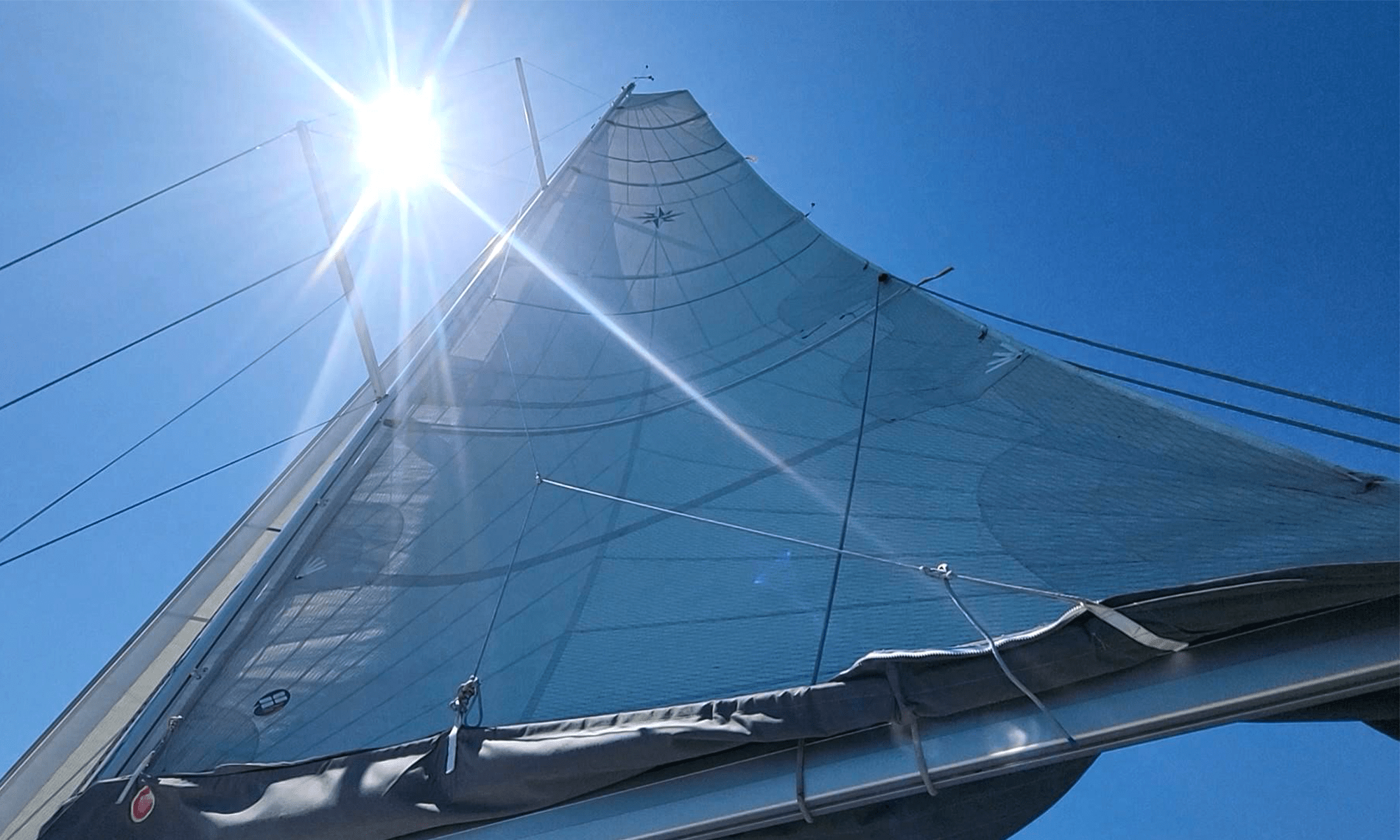
A couple of weeks ago, we marked another milestone in our sailing journey: we embarked on our “check sail” for the 2024 season with SailTime Chicago (the fractional membership sailing club we joined last year). This is a new summer, a new boat, and another new set of firsts!
The day before, we drove to Chicago and spent the night in the marina on our new boat, Red Sky. We woke up early to meet Captain Ryan, the manager of SailTime Chicago. It felt like a lifetime since our last outing on Lake Michigan.
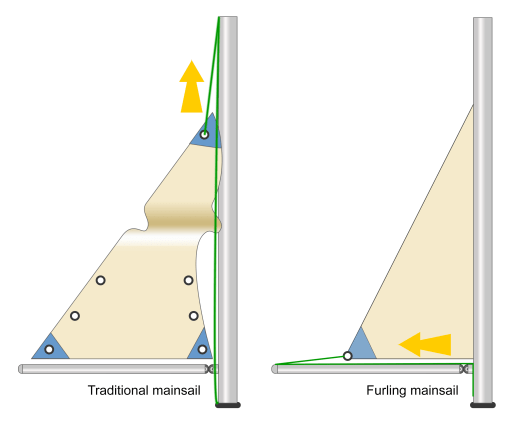
Our previous boat, Sister Sail, was a Beneteau Oceanis 30. She was a comfortable vessel with a V-berth, two guest cabins and a single head. She had an in-mast furling mainsail and a furling jib sail (that wraps around the forestay, the wire that runs from the very front of the boat to the top of the mast). These modern sail systems are widely used and offer convenient sail handling, but it was new to us, having learned to sail on a boat with a traditional mainsail.
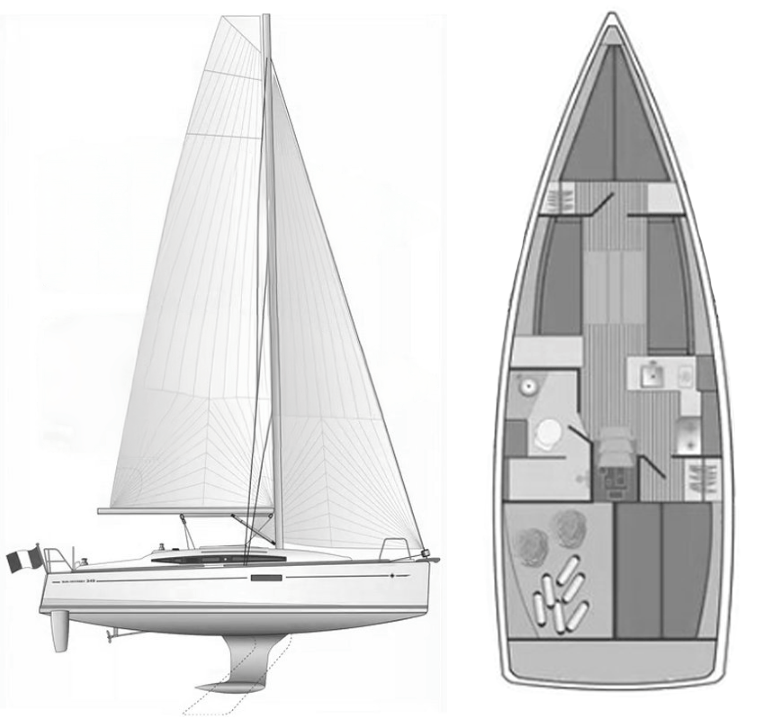
Red Sky, a Jeanneau Sun Odyssey 349, is a different beast altogether. She boasts a double helm and double rudders, and is configured as the owner’s version, with a V-berth, one aft cabin (instead of two), and a single head that included a shower! The public areas seemed slightly smaller than Sister Sail, but the extra space in the sleeping quarters more than made up for it.
Red Sky is equipped with a traditional mainsail and a furling jib. In addition to reacquainting ourselves with the traditional mainsail, we needed to address four key areas: the electric winch in the cockpit, reefing the traditional mainsail, bow thrusters, and the double rudders.
Electric Winch
The electric winch in the cockpit was a revelation. It had a slow and a fast setting, making sail-hoisting a breeze. We had to make sure the head of the sail didn’t get caught up in the lazy jacks on the way up. Otherwise, it was quite a piece of cake!
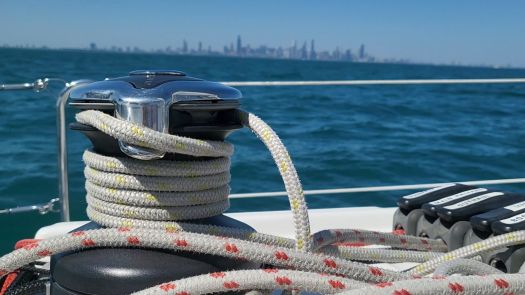
A winch is a winding device that gives you a mechanical advantage when tightening lines. The etched ridges on the drum enhance its grip. When you pull the tail of the line, the winch, spinning on bearings, provides a more secure grip on the line compared to pulling the line directly.
Reefing the Sails
Reefing reduces the sail’s size to avoid being overpowered when the wind kicks up. It is crucial for comfort and safety as too much wind can make it difficult to control the boat and can even cause damage.
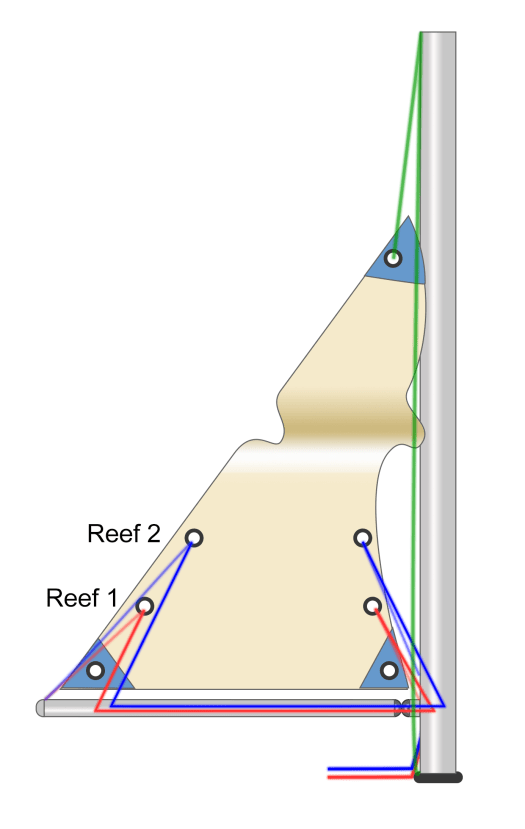
Red Sky’s mainsail has 2 reef points pre-set with reefing cringles and lines at the tack and clew. To reef the sail, we simply lowered the mainsail to the desired reef point, pulled in the reefing lines, and then re-tensioned the halyard.
To be honest, reefing on Sister Sail was easier; we simply furled it in. But being able to handle a traditional mainsail seems important to me, much like knowing how to drive a stick shift.
Bow Thrusters
The bow thrusters made maneuvering in the marina significantly easier. (I can’t emphasize this enough.) Bow thrusters do exactly what it sounds like—provide propulsion that moves the bow of the boat left or right. However, it’s important to remember that sailboats differ from motor vessels. Instead of being powered and steered from the stern, a sailboat pivots around its keel, which is near the center of the boat. Consequently, when the bow moves right, the stern moves left, and vice versa – important considerations when you’re moving about in a tight marina.
Double Rudders
Compared to single-rudder boats, dual-rudder boats require more engine power and speed for steerage. This resulted in a response lag that felt uncomfortably long. As we practiced our docking, Ryan instructed us to back up out of the slip, then move the throttle to forward until the boat starts to move forward, and only then turn the wheel to make your way forward out of the fairway. If you turn the wheel too soon, you will “kill the turn.” The reason this is the case is because the double rudders, positioned on either side of the prop, are not affected by “prop wash,” whereas a single rudder has water moving over it at all times due to its proximity to the propeller, giving it a little steerage boost.
The Proof is in the Putting
On our first practice round, I took us out of the slip (using the bow thrusters and adjusting for the double rudders) and into Lake Michigan where we hoisted the sails with the electric winch and checked out the reefing system. Back in the marina, it took me three tries to land us perfectly in the slip 🙂
At that point, Ryan appeared to be satisfied and left us to our own! We went on out into Lake Michigan and had a spectacular day – smooth sailing!
Every time we have a successful sail, our confidence increases and we gain a tremendous sense of accomplishment. This is critical as we progress through this learning curve for a very important reason: we will undoubtedly have struggles in the future and will need to remind ourselves, we’re doing okay!
Despite the learning curves, our 2024 check sail on Red Sky was a success! We’re looking forward to sailing on Lake Michigan five times throughout the summer.
Discover more from SAIL & SAVOR BLOG
Subscribe to get the latest posts sent to your email.
 SAIL & SAVOR BLOG
One Reply to “”